

GRÓ GEST alumna presents research at Council of Europe
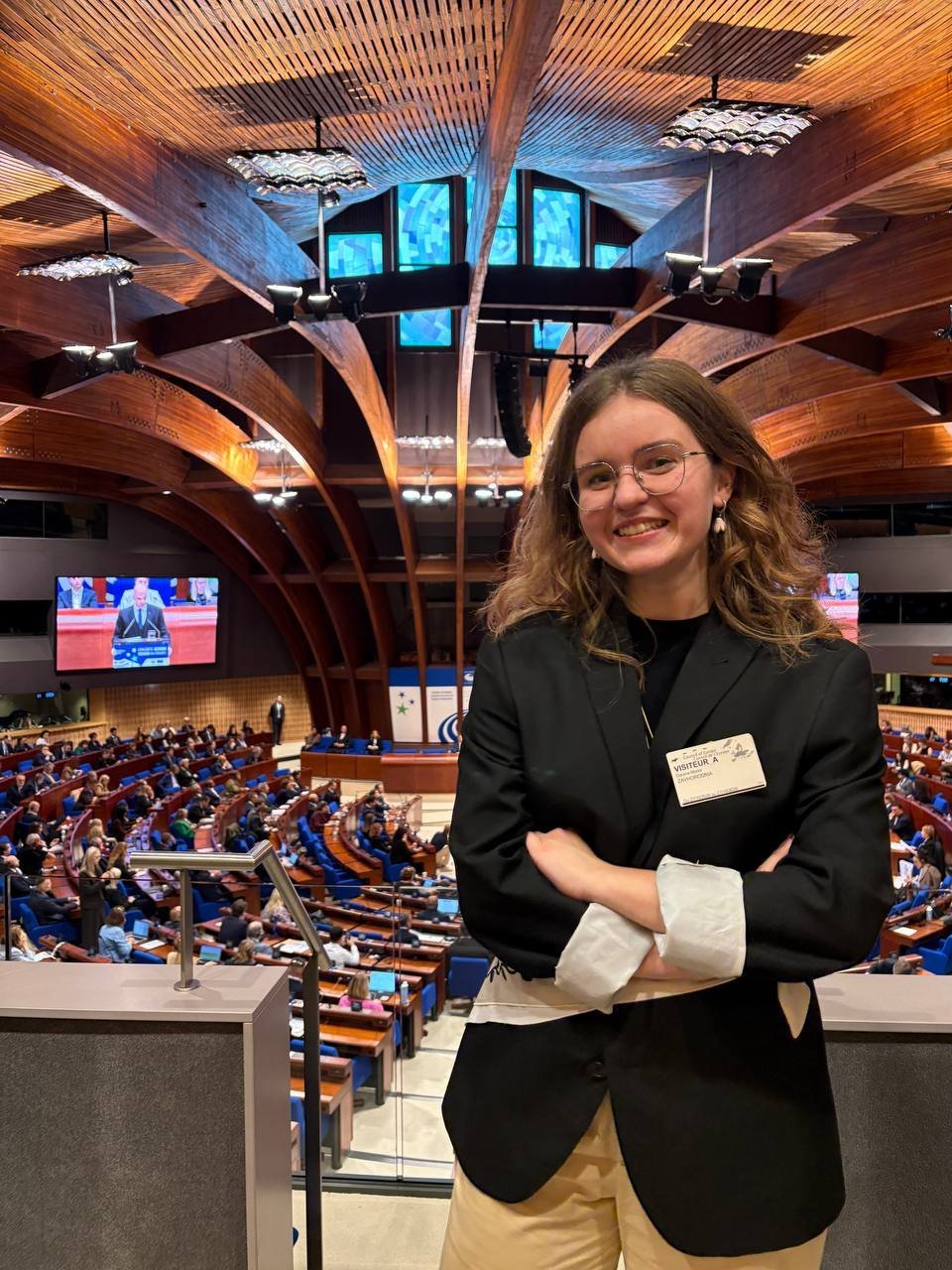
GRÓ GEST alumna Daryna-Mariia Zavhorodnia brought her award-winning research on women’s political participation during Russia’s full-scale war against Ukraine to the Council of Europe in Strasbourg on 27 October 2026. Her presentation highlighted the challenges facing women in Ukrainian politics and the importance of ensuring their meaningful participation in the country’s democratic recovery and reconstruction.
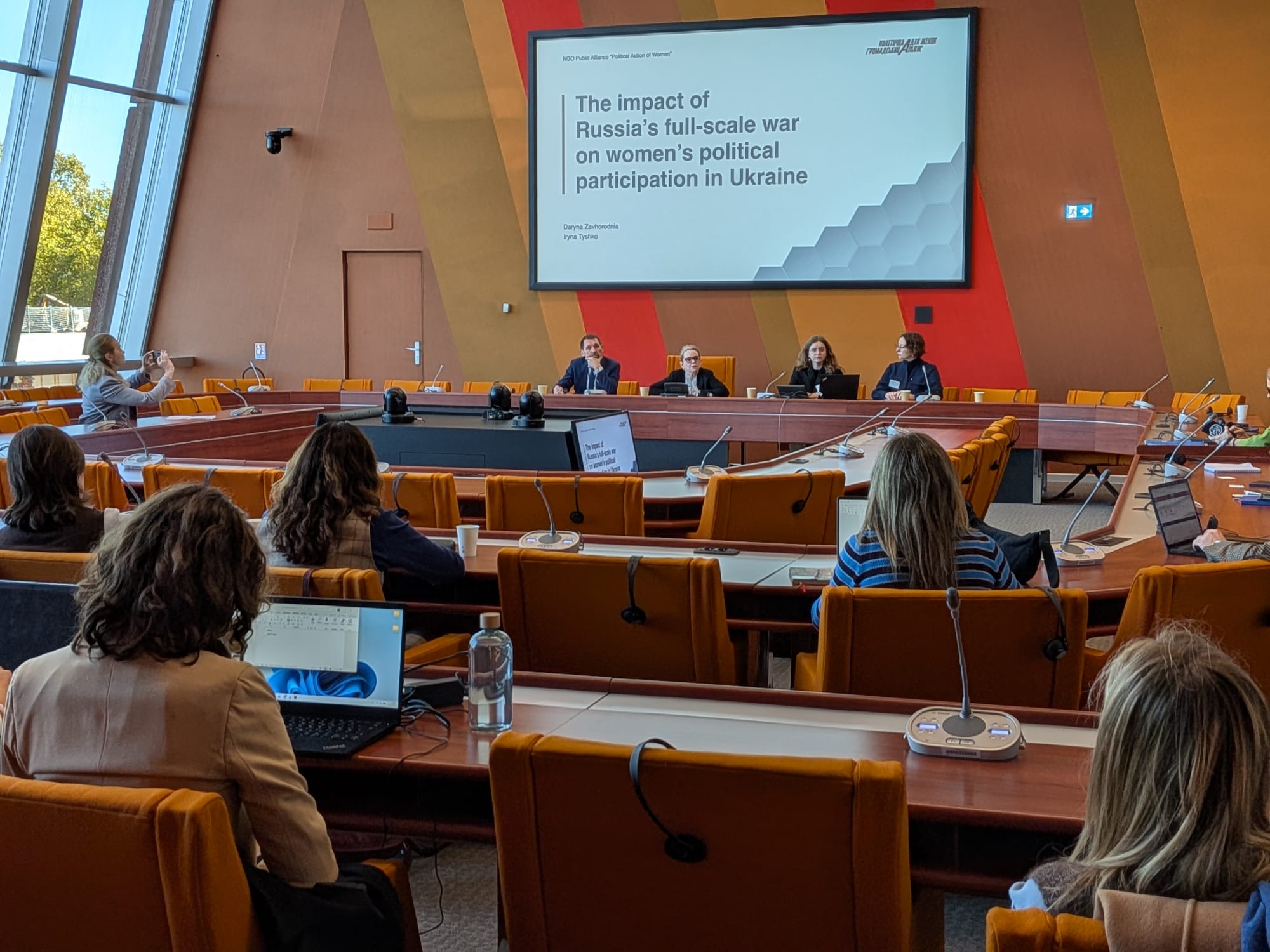
Daryna, a 2026 graduate of the GRÓ Gender Equality Studies and Training Programme (GRÓ GEST) at the University of Iceland, was invited to speak at a high-level side event during the 51st session of the Congress of Local and Regional Authorities of the Council of Europe. The event, Women’s Political Participation and Democratic Resilience in Ukraine amid Russia’s Full-Scale War, was initiated by Iceland’s Permanent Representative to the Council of Europe, Ambassador Gréta Gunnarsdóttir, and jointly organised by the Permanent Representations of Iceland and Ukraine.
The event brought together diplomats, policymakers and civil society representatives to discuss how women's political participation and representation can be safeguarded during the war and in Ukraine's eventual recovery and reconstruction.
From research in Iceland to international policy discussions
During her studies at GRÓ GEST, Daryna conducted research examining the professional trajectories of women local council deputies who resigned from office following Russia's full-scale invasion. Her study, The Impact of Russia’s Full-Scale War on Women’s Political Participation in Ukraine, was supervised by Dr Aiko Holvikivi of the London School of Economics and Political Science and received the 2026 Vigdís Finnbogadóttir Award for the best research assignment at GRÓ GEST.
Drawing on quantitative data and nine in-depth interviews, Daryna explored how the war has reshaped women's opportunities for political participation. Her findings reveal that resignation from elected office does not necessarily mean withdrawal from political life. Many women continue to exercise political agency through civil society organisations, volunteering, humanitarian work and other forms of public engagement.
However, Daryna cautioned that these shifts carry significant risks for women's future political representation. Women who have spent years outside formal politics may face considerable obstacles when elections resume, including displacement, economic insecurity, residency requirements and longstanding gender inequalities.
The central challenge, she argued, is to recognise women's contributions outside formal political institutions without allowing their wartime exclusion from elected office to become permanent.
Daryna's presentation in Strasbourg builds on her continued efforts to bring her research into public and policy discussions. In September, she presented her findings during Gender Equality Week at the National University of Kyiv-Mohyla Academy in Ukraine, where an air-raid alert forced participants to relocate to an underground shelter. Together with Ukrainian colleagues, she is now working to develop the research into further publications and policy recommendations.
Supporting women's political participation in Ukraine
Ambassador Gunnarsdóttir opened the event by emphasising Iceland's continued support for Ukraine and the importance of women's participation in democratic governance. She also highlighted the contribution of programmes such as GRÓ GEST in enabling research that can inform policy and strengthen democratic institutions.
Ukraine's Ambassador to the Council of Europe, Mykola Tochytskyi, spoke about women's resistance during the war and their essential contributions to the resilience of Ukrainian society.
Daryna was joined by Iryna Tyshko, leader of the Ukrainian NGO Public Alliance "Political Action of Women", which nominated Daryna for the GRÓ GEST programme. Tyshko presented policy recommendations arising from Daryna's research, emphasising the need for Ukrainian authorities, civil society, international organisations and political parties to begin preparing now for women's meaningful participation in future elections.
The discussion also addressed the particularly low representation of young women in Ukrainian politics. Reflecting on her own generation, Daryna pointed to the many young Ukrainian women who have gained valuable knowledge and experience through studies abroad and who hope to return and contribute to their country's future.
Their potential, she argued, must be matched by genuine opportunities to participate, including political parties willing to welcome young women and a political environment free from sexism, harassment and online abuse.
GRÓ GEST and Iceland's cooperation with Ukraine
Daryna's participation in Strasbourg illustrates the wider objectives of GRÓ GEST's growing cooperation with Ukraine, supported by Iceland's Ministry for Foreign Affairs. Through postgraduate education, research and institutional partnerships, the programme seeks to strengthen Ukrainian capacity to advance gender equality, inclusive governance and democratic resilience.
Daryna is also one of the initiators of Unissued Diplomas, an international initiative commemorating Ukrainian students killed during the war before completing their education. During her studies in Iceland, she helped bring the exhibition to the University of Iceland, where it opened on 24 February 2026.
Her work demonstrates how knowledge developed through GRÓ GEST can continue to generate impact beyond the programme itself, connecting research with civil society advocacy and international policy discussions.
Above all, her research underscores a fundamental principle guiding GRÓ GEST's cooperation with Ukraine: gender equality cannot be postponed until after the war. The decisions being made today will shape Ukraine's future democratic institutions, and women must have a meaningful role in shaping that future.