
News
From Final Assignment to Action
4 August 2026
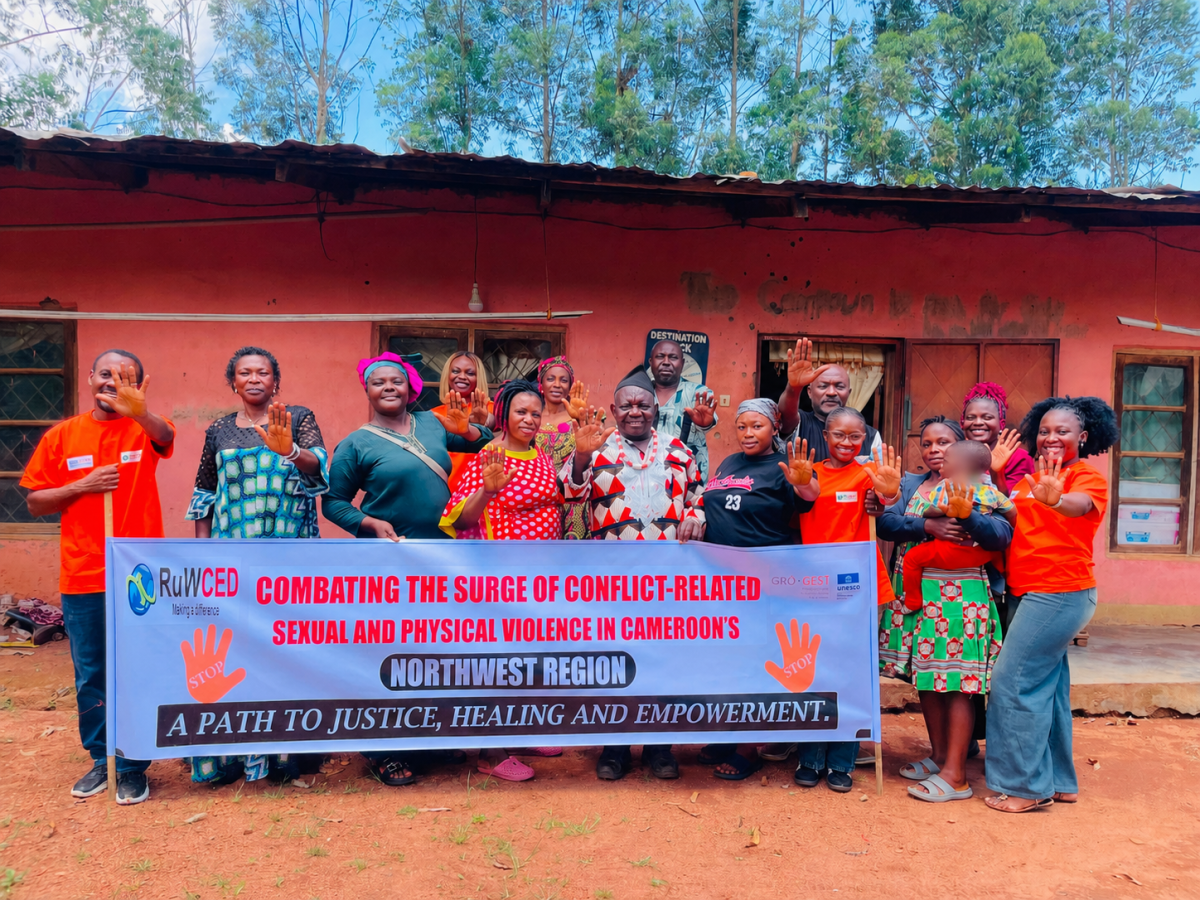
Participants and facilitators following the first workshop with traditional authorities and quarter heads in Chinde Quarter, Bamenda, Cameroon. Photo: RuWCED Cameroon.
Only weeks after completing the GRÓ Gender Equality Studies and Training Programme, alumna Norah Lumnyi Ngwa began implementing the project she developed during her studies in Iceland.
Norah participated in the GRÓ GEST postgraduate programme from January to May 2026. As her final assignment, she developed Combatting the Surge of Conflict-Related Sexual and Physical Violence in Cameroon’s Northwest Region: A Path to Justice, Healing and Empowerment. The project applies a survivor-centred and community-based approach to strengthening the protection of women and girls in communities affected by conflict.
Norah is the Community Engagement Officer and Theatre of the Oppressed Officer at the Rural Women Center for Education and Development, RuWCED Cameroon. After returning home from Iceland, she moved directly from project development to implementation, with RuWCED leading and funding the work independently.
Working with traditional authorities
The first workshop was held on 23 July 2026 in Chinde Quarter, Bamenda II Subdivision, in Cameroon’s Northwest Region. Coordinated by Norah, it brought together ten members of the community and five RuWCED staff members to discuss gender-based violence, its identification and reporting, and the responsibilities of traditional authorities in supporting survivors.
Mr Joseph Tabufor, Quarter Head of Chinde Quarter, welcomed the RuWCED team, approved the workshop agenda and granted permission for the activities to be carried out within the community.
Norah facilitated the first session, introducing the different forms of gender-based violence and placing particular emphasis on conflict-related sexual and physical violence. Participants discussed the consequences of violence and considered how community members might recognise signs that someone is experiencing abuse, including physical injuries, reports from neighbours, social withdrawal and prolonged silence.
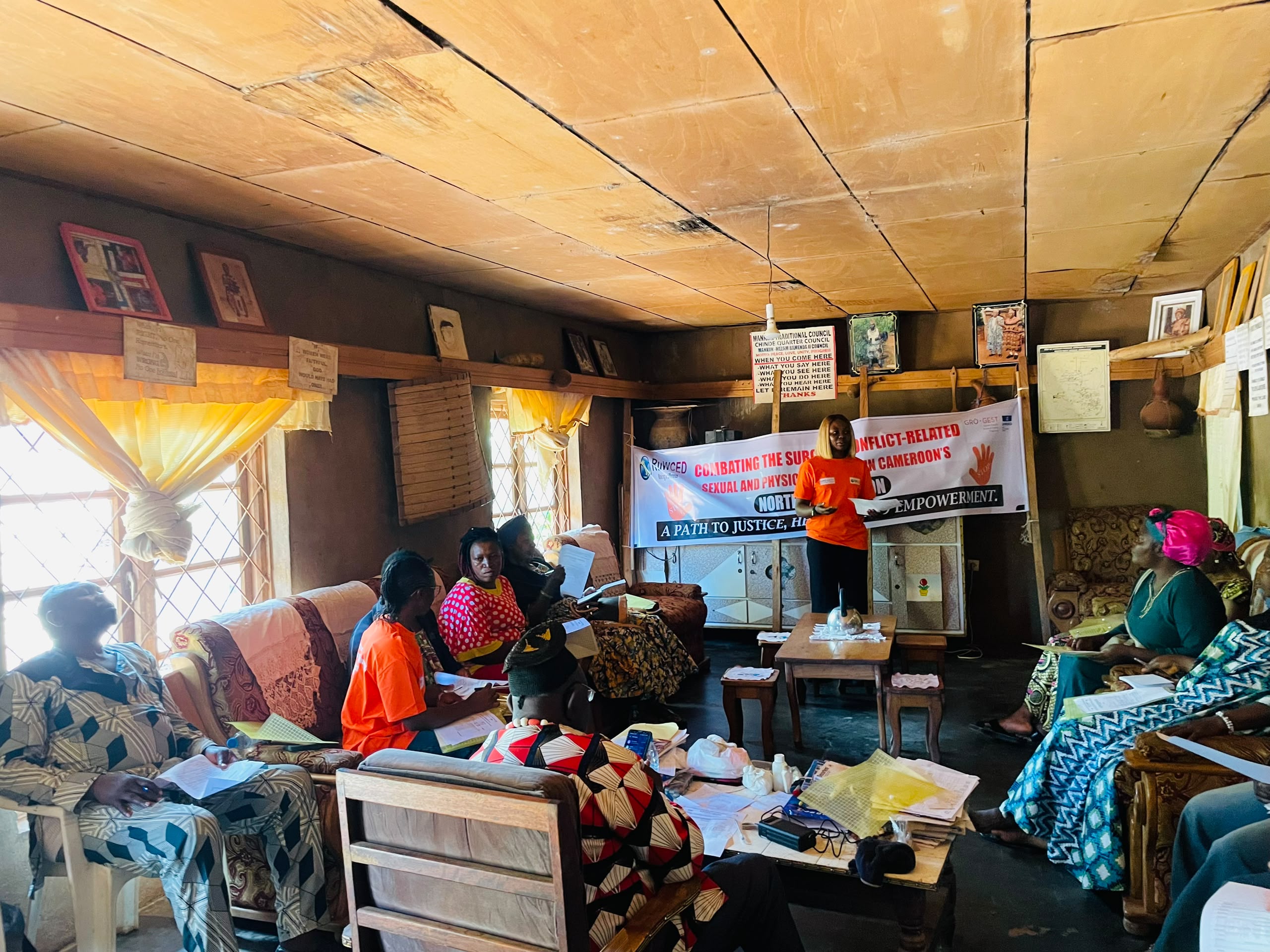
Traditional leaders, community representatives and RuWCED staff discuss the identification, reporting and prevention of gender-based violence (credit: RuWCED-Cameroon)
A second session, facilitated by Abonge Laura, focused on the importance of reporting violence. Participants examined the different channels through which cases may be reported, beginning with families and traditional councils and extending to churches, civil society organisations, law-enforcement bodies and relevant administrative authorities. The session emphasised that appropriate reporting can facilitate timely support, prevent further violence, promote accountability and protect survivors’ rights and dignity.
The final session was led by Ngwa Elvis, who addressed the role of traditional leaders and quarter heads as advocates against gender-based violence. He encouraged leaders to speak publicly against violence, promote consent and peaceful conflict resolution, listen to survivors without judgement, maintain confidentiality, refuse to protect perpetrators and involve men and boys in prevention efforts. He concluded with the message: “Violence does not demonstrate strength or authority.”
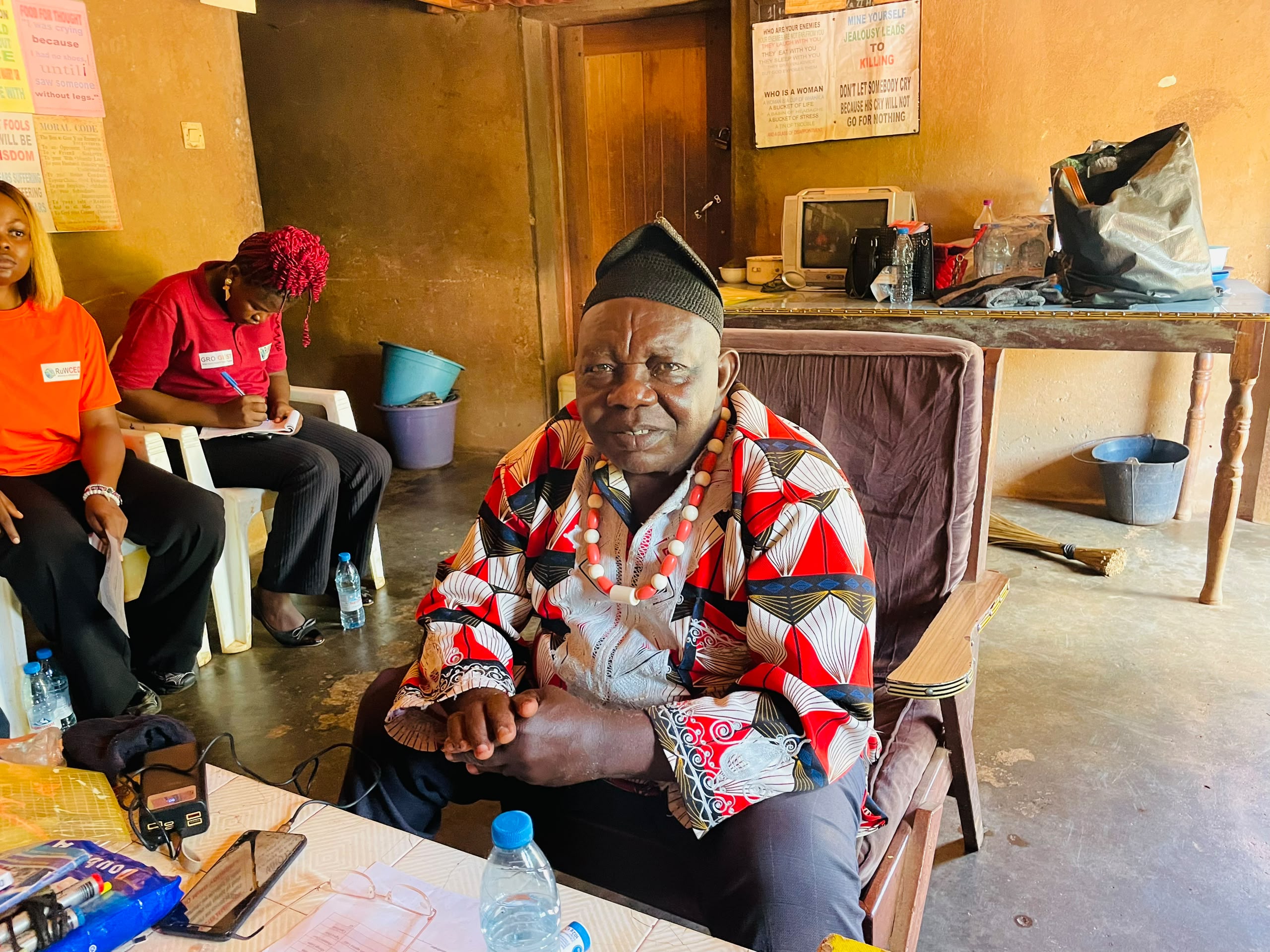
Joseph Tabufor, Quarter Head of Chinde Quarter, participated in the workshop and pledged his support for continued community awareness activities (credit: RuWCED-Cameroon)
At the close of the workshop, Norah encouraged participants to become ambassadors against gender-based violence in their communities. Mr Tabufor pledged to support the campaign and to invite RuWCED to future community gatherings. Group photographs were coordinated by Akalambi Clare.
When I developed this project at GRÓ GEST, I wanted it to be practical from the beginning. Traditional authorities are among the most trusted and influential actors in our communities. By working with them, we can strengthen local protection, support survivors and challenge the silence that allows violence to continue.
Capacity development grounded in implementation
Norah’s rapid transition from study to implementation reflects an important principle of the GRÓ GEST capacity-development model. Candidates are selected on the basis of strong, feasible projects that already have earmarked funding through their home organisations or demonstrated support from other donors. Norah’s project was funded by RuWCED before she applied to GRÓ GEST.
Organisations that support alumni in implementing their projects promptly after their return demonstrate the institutional ownership and commitment that GRÓ GEST values highly when considering future capacity-development opportunities.
Norah’s project is planned to run for 13 months, from June 2026 to June 2027. Its next stages are expected to include further workshops reaching a total of 50 traditional leaders, fourteen radio programmes, engagement with commercial motorcycle riders and a public awareness march. The project also aims to strengthen referral pathways for survivors and connect displaced women and girls with free vocational training opportunities offered through RuWCED.
GRÓ GEST looks forward to following Norah and RuWCED as they continue turning a carefully developed project into locally led action for justice, healing and empowerment.