
Full Steam Ahead premieres at RIFF
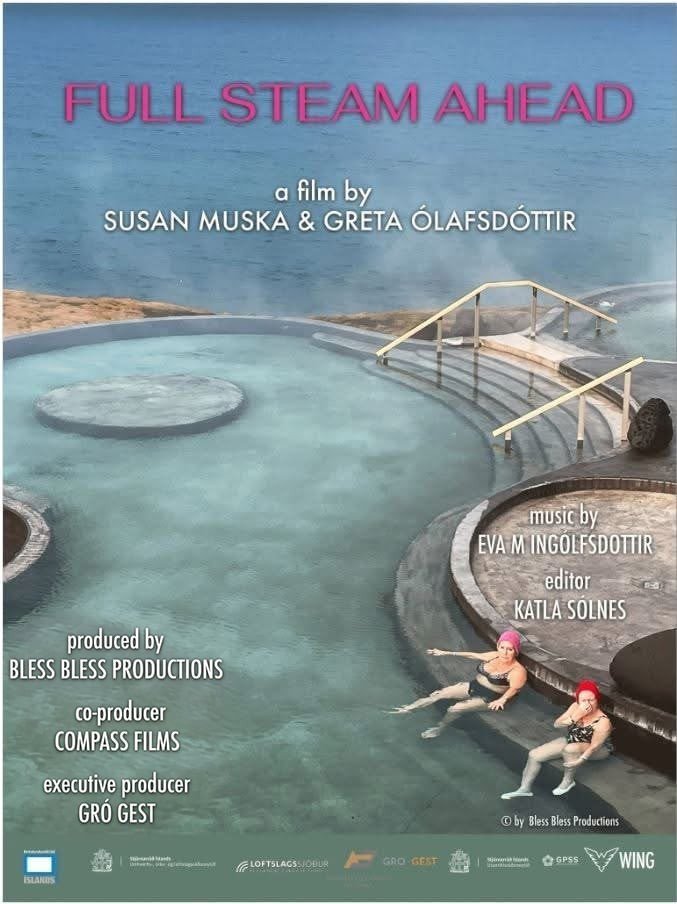
Across Iceland, Kenya and Japan, women have built careers in geothermal energy – often entering spaces where few women had gone before them. Their experiences of work, family, opportunity and resistance are at the heart of Full Steam Ahead, an 89-minute visual ethnography documentary that premiered at the Reykjavík International Film Festival (RIFF) this weekend.
Directed and produced by Susan Muska and Gréta Ólafsdóttir of Bless Bless Productions, with GRÓ GEST as Executive Producer, the film brings together women from different countries and generations to explore both how far women have come within the geothermal sector and the barriers that remain.
The film grew out of a project initiated by GRÓ GEST – the Gender Equality Studies and Training Programme – to bring together two areas of expertise within the GRÓ Centre: gender equality and geothermal energy. GRÓ GEST initiated the project, approached the filmmakers, provided funding and led its development during its formative years. From the outset, the project combined an ethnographic research component with the development of a documentary film, creating space both to study and to document the experiences of women working in the geothermal sector.
Early in the project, GRÓ GEST came into contact with Women in Geothermal (WING), an international network working to increase the visibility and participation of women in the geothermal sector. WING subsequently became a partner in the project, connecting it not only with women working across the sector internationally, but also with a community of women actively supporting one another, challenging inequalities and working to improve women’s position within the field.
Research and visual ethnography
The project was grounded from the outset in a research component examining women’s experiences in the geothermal industry across different cultural and professional contexts. This research helped lay the conceptual and scholarly foundation for Full Steam Ahead, shaping the development of the project and its visual ethnographic approach. Dr Erla Hlín Hjálmarsdóttir, former Research Coordinator at GRÓ GEST, and Dr Giti Chandra, Associate Research Professor at GRÓ GEST, led this research together with filmmaker Susan Muska. Their work resulted in the conference paper Full Steam Ahead: Women in the Geothermal Industry, published in the Proceedings of the 7th African Rift Geothermal Conference, held in Kigali, Rwanda, in 2018.
Laura Malinauskaite, then a doctoral student and contributor to the project, also carried out research and support work for Full Steam Ahead, including research undertaken in Japan. The research and the film developed as interconnected parts of the same initiative, combining visual ethnography and qualitative research to examine gender equality, workplace cultures, and the experiences and position of women in the geothermal sector across different cultural contexts.
Across countries and generations
The international scope of Full Steam Ahead reflects the perspective from which the project was conceived. Both GRÓ GEST and the GRÓ Geothermal Training Programme (GRÓ GTP) work within an international development cooperation context, bringing together people and experiences from countries around the world, while GRÓ GTP has a particular focus on geothermal knowledge and capacity development.
The film offers glimpses into the lives and work of women in geothermal energy across very different national and cultural contexts. It shows both common struggles and the different forms that barriers to women’s participation can take from one country to another.
Several of the women interviewed in the film who have studied in Iceland through GRÓ GTP reflect on what they took home with them from that experience. For some, studying and working alongside women in the Icelandic geothermal sector offered a different perspective on what was possible for women professionally, including seeing women participate fully in fieldwork.
Documenting change – and continuity
Taken together, these stories document both change and continuity in women’s experiences of the geothermal sector. Much has changed, particularly for younger generations entering a field in which women are now more visible and established. At the same time, the film shows how inequalities can persist even as their forms change.
This raises a broader question: what does meaningful equality look like beyond women’s entry into a traditionally male-dominated profession? The experiences documented in the film suggest that participation is not only about being present. It is also about having equal access to opportunities and responsibilities, being able to work safely, progress professionally and combine work and family life, and having one’s knowledge and expertise recognised throughout a career.
Barriers that change – and persist
The story spans generations. The women who first entered the geothermal sector were very few in number. As pioneers in a field built largely by and for men, they carried much of the burden that comes with being among the first: not only doing their jobs, but also having to challenge assumptions about whether women belonged there in the first place.
The younger generation enters a very different geothermal sector, shaped in part by the ground those women broke. Yet many are also looking critically at the profession today and drawing attention to inequalities and structural barriers that remain. Their experiences remind us that progress does not necessarily mean that the work is finished; some barriers disappear, while others become less visible or take new forms.
Age and the experiences of older women are given particular attention in the film. Drawing on research into the experiences of women in Iceland’s geothermal sector, Full Steam Ahead highlights differences between generations, including findings indicating that women over the age of 55 report less positive experiences in the workplace than younger women.
This raises the issue of gendered ageism and a striking paradox: women may reach the point in their careers where they have accumulated the greatest experience, knowledge and expertise, while at the same time becoming less visible or less valued. Men are often allowed to grow into authority as they age, while ageing can affect how women’s authority and expertise are perceived in very different ways.
Other inequalities can begin much earlier in a career. Women are not always given the same tasks or entrusted with the same responsibilities as their male colleagues. Such differences can accumulate over time: missing out on particular assignments can mean fewer opportunities to build experience and demonstrate expertise, with potential consequences for professional development and career progression.
Some barriers are strikingly tangible. Women interviewed in both Iceland and Kenya speak about inadequate toilet and changing facilities, while workwear and protective clothing are often designed and sized with male bodies in mind, leaving women with clothing that is too large or poorly fitting. These seemingly mundane details point to a broader issue running through the film: women are entering and reshaping professional environments in which everything from facilities and equipment to established working practices has historically been designed around men as the norm.
Sexual harassment and unequal power are another recurring theme. Some of the older women recall a workplace culture in which women knew there were certain men they should avoid – even learning not to be alone with them or enter an elevator with them. Their stories show how much of this behaviour went unspoken and was instead managed informally by women themselves. Younger women describe different manifestations of harassment, including through social media, as well as less visible forms of intimidation and misuse of power. Across generations, the form may change, but the underlying questions of safety and power remain.
The film also draws attention to significant differences in women’s possibilities to combine professional and family life. These challenges exist across countries, but the conditions under which women navigate them vary considerably. In Iceland, a twelve-month parental leave system – with four months allocated to each parent and a further four months that can be shared between them – provides a framework intended to support a more equal sharing of care and make it easier for both parents to remain engaged in working life. Japan presents a marked contrast in the film, particularly in its discussion of the pressures surrounding motherhood, family responsibilities and women’s ability to sustain careers in the sector.
Bringing these stories together therefore does more than provide an international backdrop. It shows how women working in the same global sector encounter both shared and very different barriers – but also how knowledge, professional experience and encounters between women across countries can open up new possibilities.
Breaking the silences
Another important thread running through Full Steam Ahead is the need to speak openly about experiences that have too often remained unspoken. Again and again, the women in the film return to the importance of talking about what happened – including experiences that were not discussed at the time, were difficult to name, or were surrounded by expectations of silence.
In this sense, the film can be seen as working against what the French historian Michelle Perrot has described as the “silences of history”: the ways in which women can be present, working and contributing, while their experiences and perspectives remain absent from the historical record and from the stories later told about the past.
By creating space for these women to speak in their own voices, Full Steam Ahead helps to challenge those silences. These women were not standing on the sidelines of the development of geothermal energy; they were part of making that history. Recording their contributions, the barriers they faced and experiences that could not always be spoken about openly helps preserve a fuller history of the sector.
For the pioneering generation in particular, this matters. Making their experiences visible is not simply about remembering individual women, but about writing women back into the history of geothermal energy itself.
Continuing the conversation
The premiere was followed by a RIFF Impact Talk, Full Steam Ahead: Women, Energy and Equality, bringing the themes of the film into a wider conversation about gender equality in the geothermal and energy sectors.
The discussion brought together directors Gréta Ólafsdóttir and Susan Muska with Hrefna Kristmannsdóttir, Hildigunnur Thorsteinsson, Irma Erlingsdóttir and Málfríður Ómarsdóttir, and was moderated by film studies scholar Guðrún Elsa Bragadóttir.
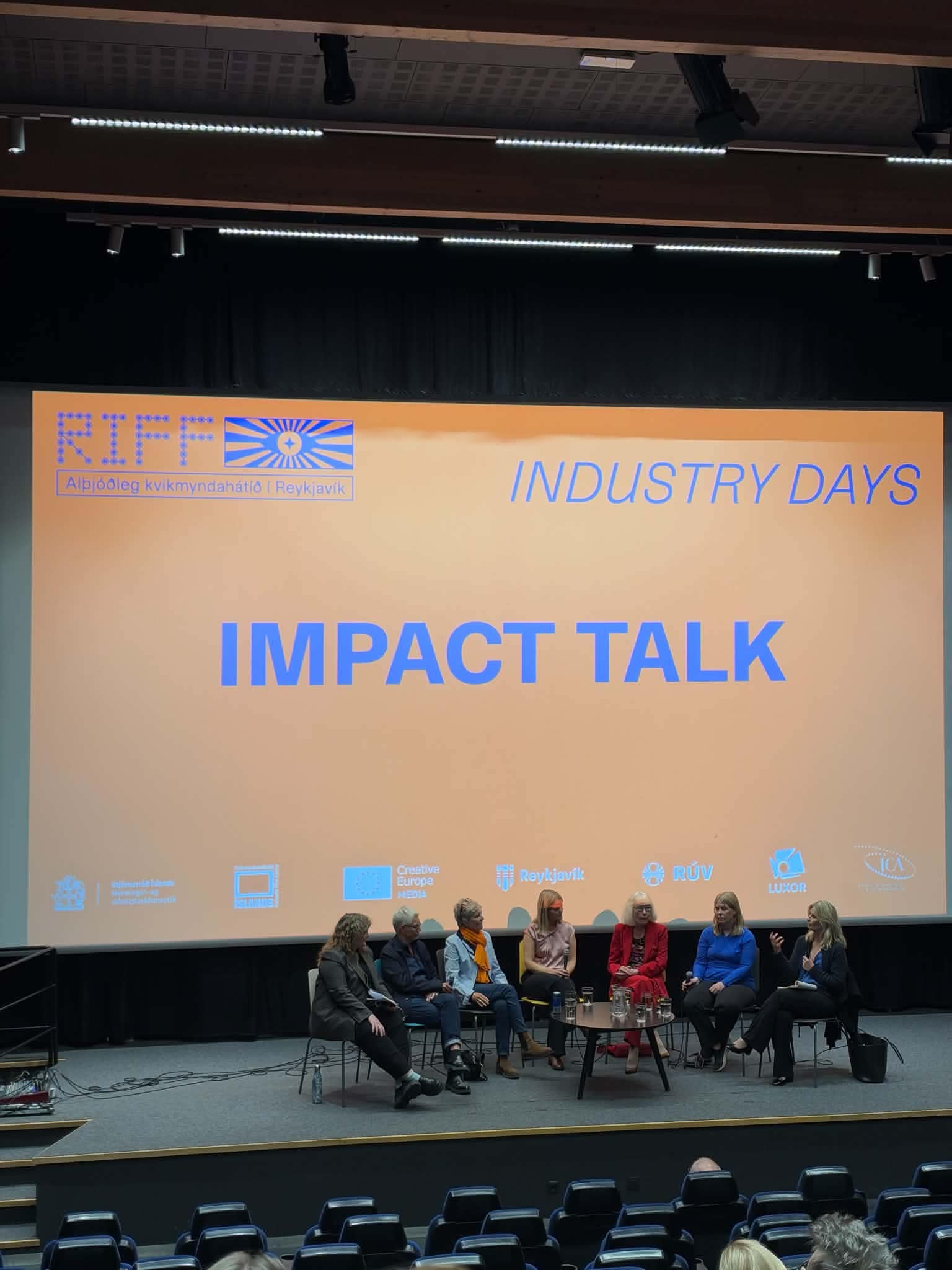
Drawing on both the film and the participants’ own experiences, the conversation explored what has changed for women across generations – and what still needs to change. The discussion ranged from entering and building careers in traditionally male-dominated professions to workplace culture, access to leadership and responsibility, recognition of women’s expertise, sexual harassment and the conditions needed for women to build and sustain careers in science and energy.
The format was particularly fitting for Full Steam Ahead. RIFF’s Impact Talks are intended to move beyond the conventional post-screening Q&A, using films as a starting point for wider public discussion and connecting them with specialised knowledge and the social questions they raise. In this case, the conversation reinforced one of the central ideas running through the film: that increasing the number of women in a sector is only one part of the story. Meaningful equality also depends on what happens once women are there – whose expertise is recognised, who has access to opportunities and influence, and whose experiences become part of the story a profession tells about itself.
Full Steam Ahead will be screened again at RIFF on Wednesday, 30 September, at 19:30 in Screen 2 at Háskólabíó, followed by a Q&A. The discussion will include GRÓ Geothermal Training Programme (GRÓ GTP) fellows Anastasiia Chupryna from Ukraine, Nursanty Banjarnahor from Indonesia and Araksan Ahmed Aden from Djibouti, further highlighting the collaboration between GRÓ GEST and GRÓ GTP that has been central to the project from its inception – bringing together expertise in gender equality and geothermal energy.
Beyond the festival, GRÓ GEST looks forward to continuing the conversation around Full Steam Ahead and exploring how the film can be used as a resource for teaching, outreach and further dialogue on gender equality, professional cultures and women’s participation in fields that have historically been dominated by men.
GRÓ GEST gratefully acknowledges the generous support that made Full Steam Ahead possible, including funding from the Icelandic Equality Fund and the Watanabe and Sasakawa Foundations. GRÓ GEST also extends its sincere thanks to the partners, researchers and participants who contributed to the project over the years, and especially to the women who generously shared their experiences, knowledge and stories.