
GRÓ GEST 2025 Field Trip

Following the submission of their final assignments, the 2025 GRÓ Gender Equality Studies and Training (GEST) cohort embarked on the programme’s annual four-day field trip to southern and southeastern Iceland. The field visit marked both the conclusion of the fellows’ academic journey in Iceland and an integrated learning experience linked to the final module on Gender, Environment, and Climate Change.
The field trip was led by GRÓ GEST Director Irma Erlingsdóttir and Academic Programme Manager Thomas Brorsen Smidt.
The journey began with an early departure from Reykjavík, heading south toward Skógarfoss. Along the way, the dramatic Icelandic landscape provided a living illustration of the geological and climatic processes discussed throughout the programme. After lunch, the group continued east to Vatnajökull National Park, where fellows attended a presentation at the Skaftafell Visitor Centre. In addition to an introduction to the park’s conservation work and the visible impacts of climate change on Iceland’s glaciers, the ranger highlighted an often-overlooked gender dimension of environmental management: Iceland’s unusually high proportion of female park rangers, and how gender equality has shaped recruitment, leadership, and everyday conservation practice within the national park system. The day concluded with check-in at the Berjaya Hotel in Höfn, followed by dinner at a local restaurant.
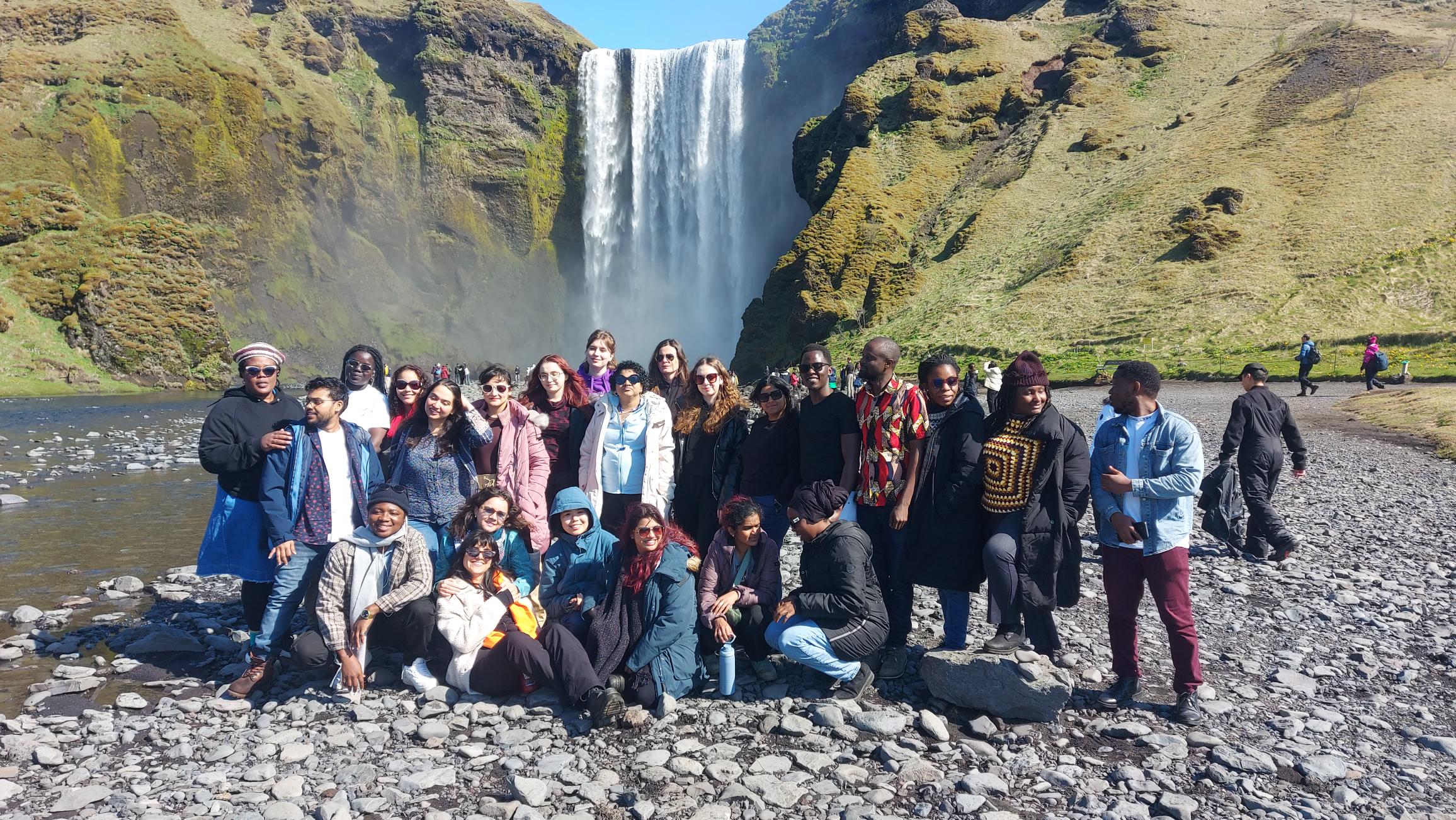
The fellows at Skogafoss
On the second day, the cohort travelled to Jökulsárlón glacier lagoon, where local guides led a tour focusing on glacial retreat, rising temperatures, and the broader implications of climate change for Iceland’s ecosystems and communities. Witnessing the scale and speed of environmental change firsthand offered a powerful complement to the fellows’ academic work on climate justice and gendered vulnerabilities. From there, the group visited Þórbergssetur, the Þórbergur Þórðarson Centre near Höfn, dedicated to one of Iceland’s most distinctive literary voices. The centre, located at Þórðarson’s birthplace, combines literature, landscape, and social commentary, offering space to reflect on how culture, environment, and national identity intersect. Lunch was enjoyed in the centre’s scenic surroundings.
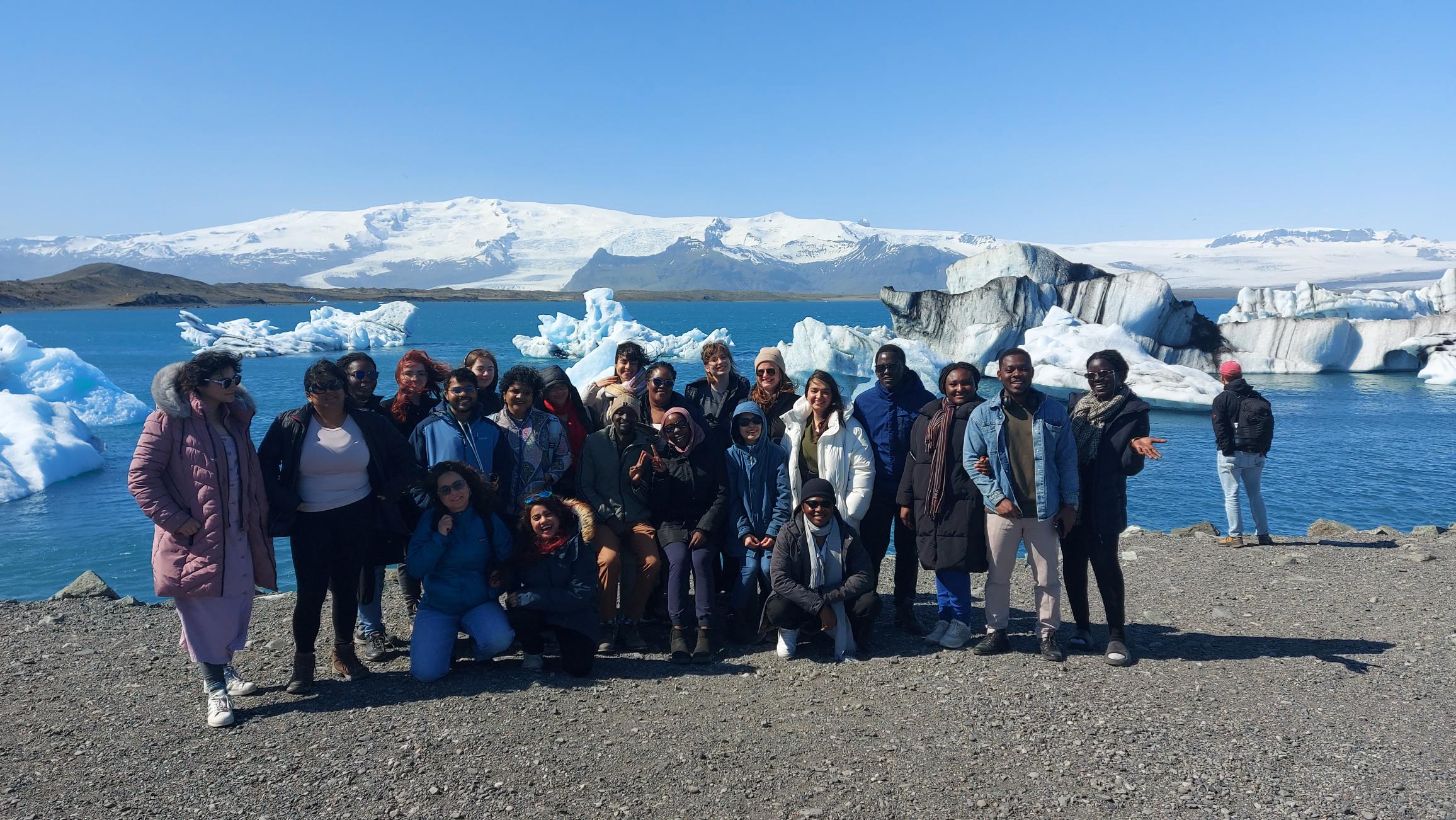
Jökulsárlón
At the beginning of the third day, the cohort visited Höfn Upper Secondary School, where fellows were introduced to municipal politics and local strategies for youth engagement. Representatives from the municipality presented how structured collaboration with schools and young people is used as a deliberate approach to strengthening local democracy and sustaining small communities. Particular emphasis was placed on how youth participation in local initiatives contributes to making Höfn an attractive place to live for both Icelanders and international residents, highlighting the role of inclusive governance in regional development and long-term community resilience. After lunch, the group went to the Viking Village film set on the Stokksnes Peninsula, a wooden replica settlement built beneath the dramatic Vestrahorn mountain. Originally constructed for an unfinished film project, the site has since become a striking example of how landscapes are reimagined and repurposed through tourism and storytelling. Despite strong winds, the group went on a hike along the coastline, experiencing the raw beauty of the black sand beaches and mountainous terrain, while discussing sustainability, tourism, and environmental pressure in fragile natural areas.
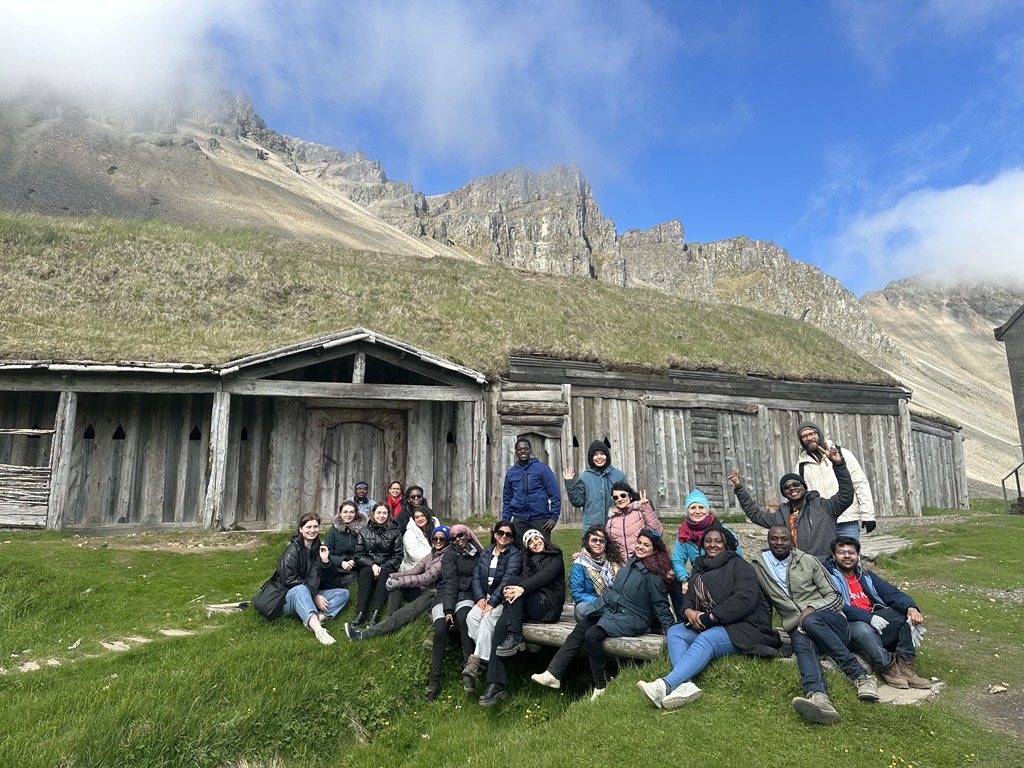 The Viking Village Film Set at Vesturhorn
On the final day, the group began the journey back to Reykjavík, stopping at the Kirkjubæjarklaustur Visitor Centre for further insight into the region’s natural history and environmental management. The trip concluded with a visit to the iconic black sand beaches of Reynisfjara, providing one last opportunity to reflect on Iceland’s unique environment and the complex relationship between nature, climate change, and human activity.
The annual field trip is an integral part of the GRÓ GEST programme. It offers fellows a chance to contextualise theoretical learning within Iceland’s environmental realities, explore how gender equality intersects with climate and conservation work, and reflect collectively on their five months of study in Iceland. At the same time, it provides space to slow down, connect as a cohort, and bring the programme to a meaningful close before returning home to apply their learning in professional and policy contexts.