
Air raid moves presentation of GRÓ GEST research underground in Kyiv
GRÓ GEST alumna Daryna-Mariia Zavhorodnia, a member of the 2026 cohort and recipient of the Vigdís Finnbogadóttir Award for best research assignment, has begun bringing the research she developed during the programme into academic, policy and public discussions in Ukraine.
Daryna received the award for her final research assignment, The Impact of Russia’s Full-Scale War on Women’s Political Participation in Ukraine. The study examines women local deputies in Ukraine who resigned following Russia’s full-scale invasion and explores whether these resignations should be understood solely as withdrawal from politics or also as a shift of political agency into other forms of civic and professional engagement.
In September, Daryna presented the research findings during Gender Equality Week at the National University of Kyiv-Mohyla Academy (NaUKMA). The presentation marked the first time the research had been presented in Ukrainian and formed part of a session entitled Women in Politics and Activism: Challenges of the Russo-Ukrainian War.
Gender Equality Week is an annual initiative at NaUKMA organised by the university’s Committee for Combating Discrimination, Sexual Harassment and Bullying together with the Department of Sociology. This year’s programme included discussions on gender studies, women’s access to military education, feminist scholarship, gender-sensitive language and women’s political participation during the war.
Daryna was invited to speak by her former academic supervisor, Professor Tamara Martsenyuk, Head of the Solomiya Pavlychko Certificate Program in Gender Studies. During the session, Daryna presented the findings of her research, while Iryna Tyshko, representing the NGO that nominated Daryna for the GRÓ GEST programme, presented policy recommendations arising from the study. The session concluded with reflections from a Kyiv City Council deputy on the findings and on her own experience in Ukrainian politics.
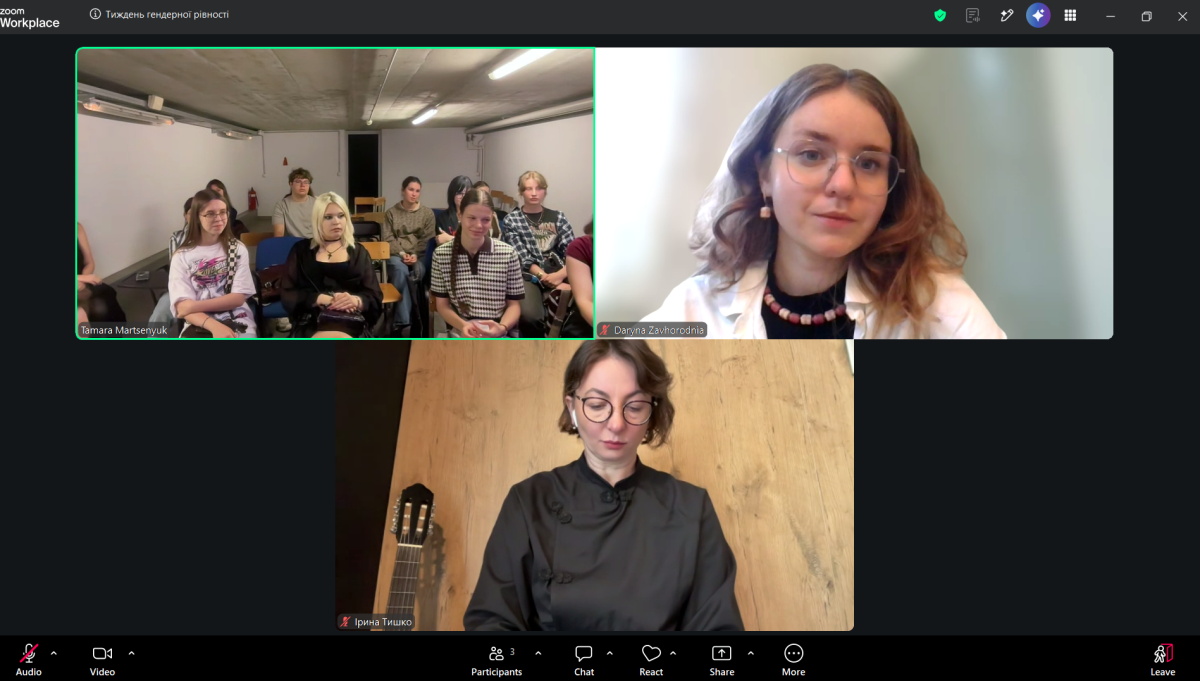
The circumstances of the event also reflected the conditions explored in Daryna’s research. Shortly before the session began, an air-raid alert was issued in Kyiv and the audience was moved from the university auditorium to one of NaUKMA’s shelters. Daryna and her colleague joined remotely, while students followed the presentation from below ground.
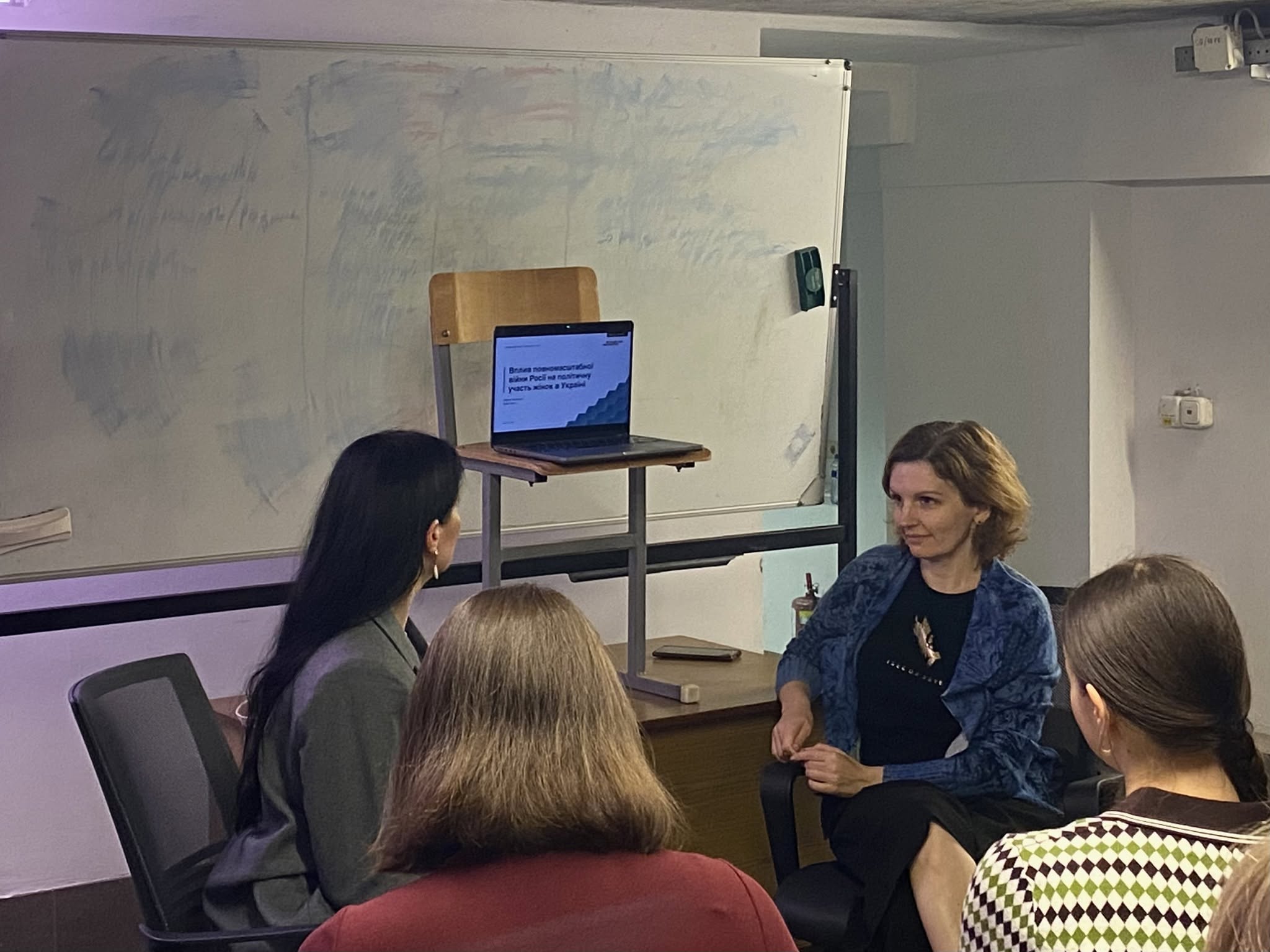
Despite the disruption, the session drew a strong audience, particularly first-year students from a range of academic disciplines. Daryna noted that many participants introduced themselves as feminists and expressed a strong interest in questions of women’s political participation.
Daryna’s research identifies a range of structural and individual pressures contributing to women’s resignations from local councils during the war, including mobility restrictions, political pressure, the expanded role of military administrations, economic precarity and accumulated exhaustion. Her original GEST research drew on quantitative data and nine semi-structured interviews.
At the same time, the research suggests that leaving formal political office does not necessarily mean a loss of political agency. Many women continue to participate politically through civil society, volunteering, charitable foundations, NGOs and other informal forms of engagement. The research nevertheless underlines the continuing importance of women’s representation in formal decision-making structures.
The NaUKMA presentation is the first stage in a wider effort to disseminate the research. Daryna and her colleagues are now preparing a full Ukrainian-language research report, as well as a peer-reviewed article in English for NaUKMA Research Papers. Sociology. A further presentation for stakeholders, media and policymakers is also planned.
In addition, discussions are under way regarding a possible presentation of the research in Strasbourg later this autumn.
Daryna’s work demonstrates how research developed through the GRÓ GEST programme can continue beyond graduation and contribute directly to academic debate, policy discussions and public engagement in fellows’ home countries.