
GRÓ GEST Signs Memorandum of Cooperation at Ukraine Recovery Conference 2026
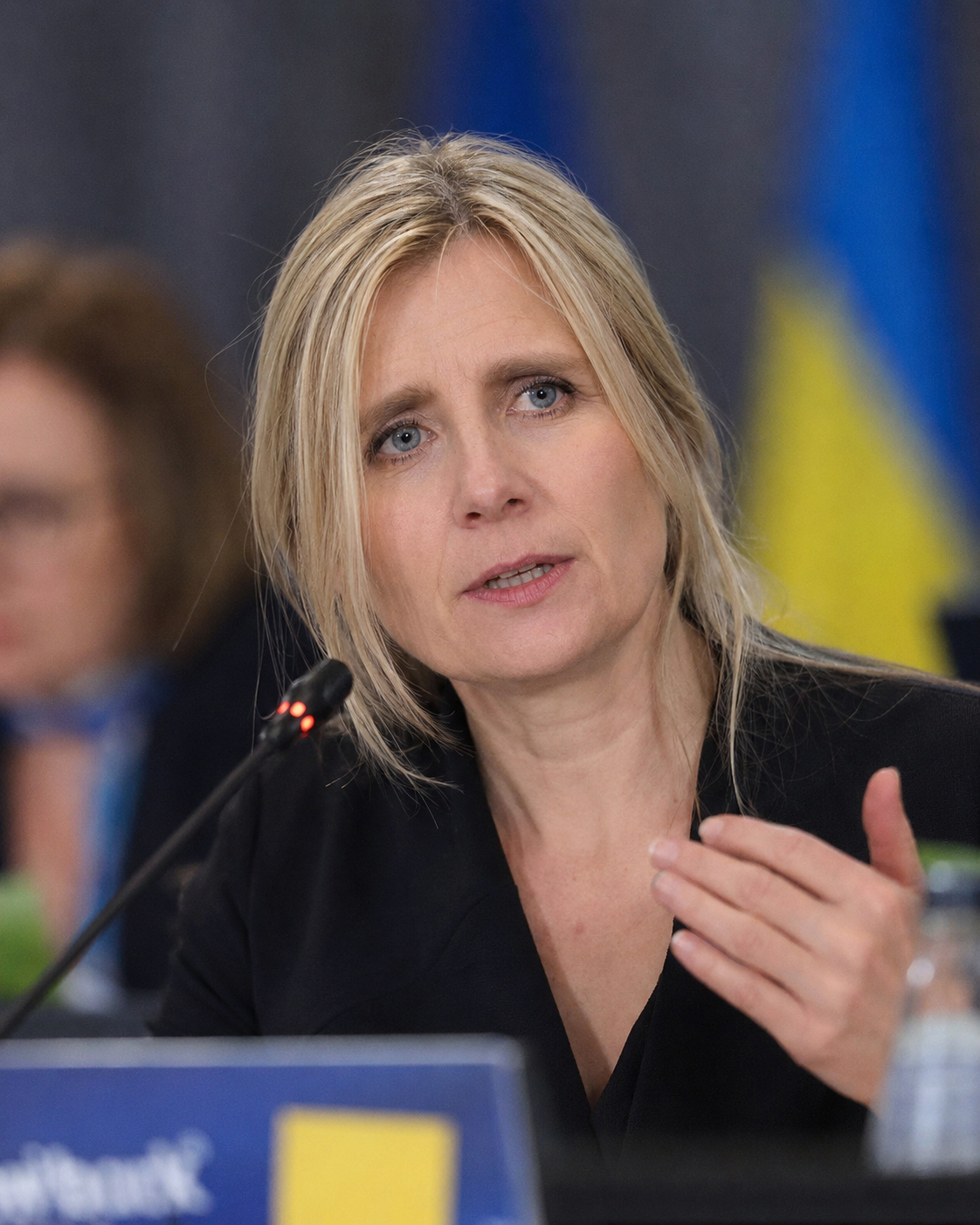
On 26 June 2026, GRÓ GEST signed a Memorandum of Cooperation with the High School of Public Governance of Ukraine during the Ukraine Recovery Conference (URC 2026) in Gdańsk, Poland.
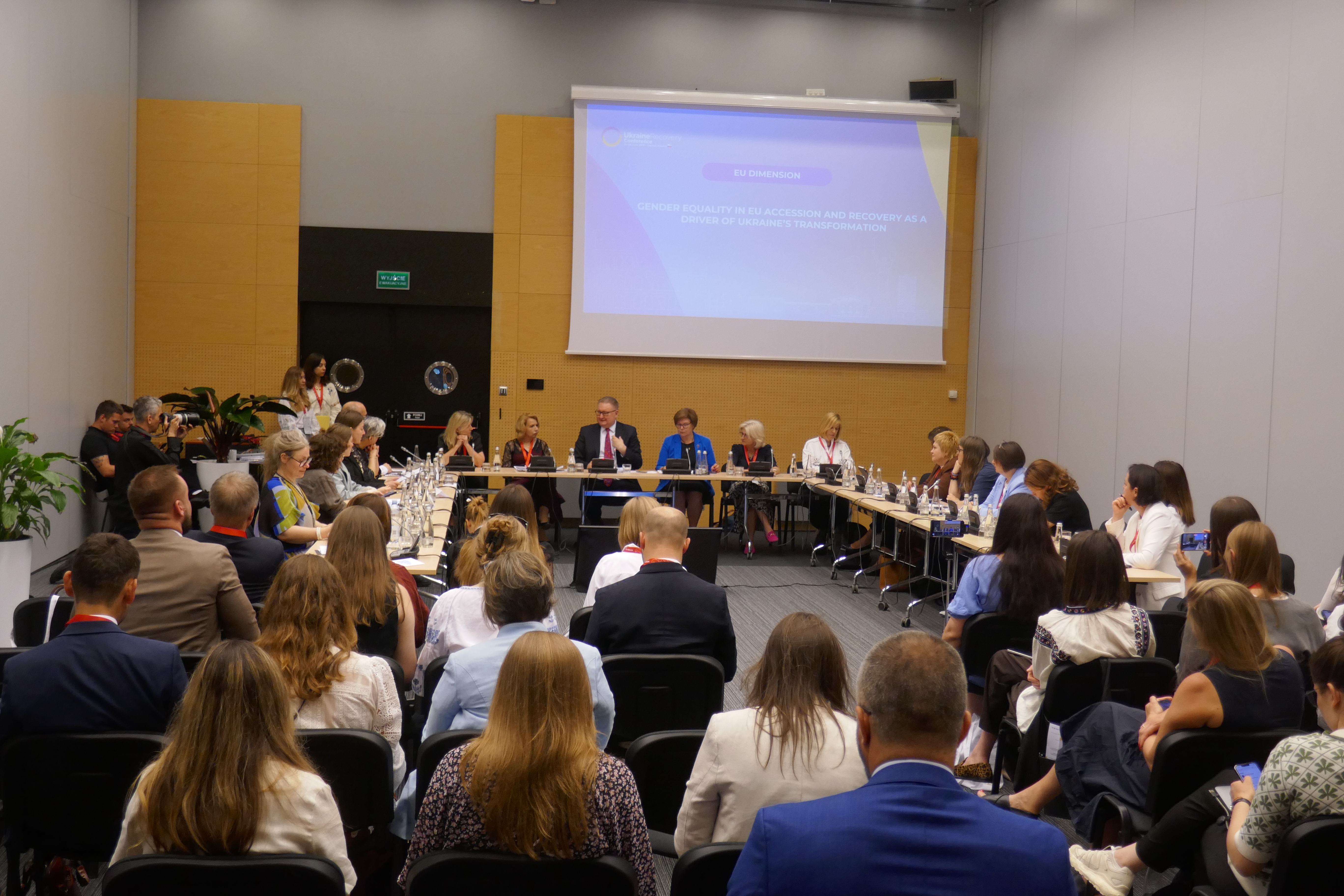
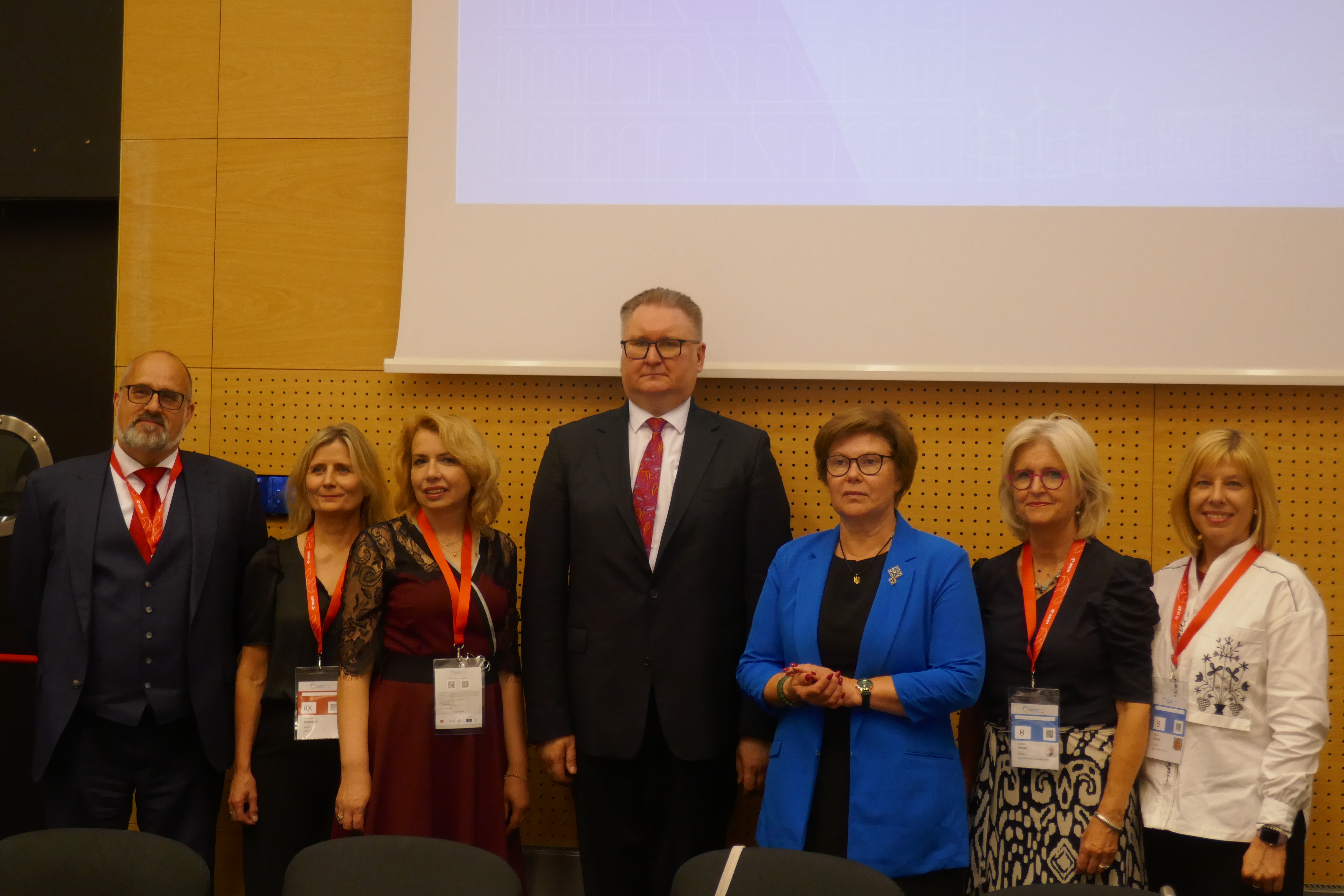
The Memorandum was signed by Dr Irma Erlingsdóttir, Director of GRÓ GEST, and Yuliia Lykhach, Head of the High School of Public Governance, as part of the high-level session Gender Equality in EU Accession and Recovery as a Driver of Ukraine’s Transformation. The session was organised under the leadership of Kateryna Levchenko, Government Commissioner for Gender Policy of Ukraine, and brought together representatives of the Ukrainian Government, the European Union, UN Women, donor countries, international financial institutions, and civil society organisations.
The workshop formed part of the broader Ukraine Recovery Conference and focused on the role of gender equality in Ukraine’s reconstruction and European integration process. Discussions addressed practical mechanisms for integrating gender-responsive approaches into recovery planning, governance reforms, public administration, data collection, and institutional development at national, regional, and local levels.
The Memorandum establishes a framework for cooperation between GRÓ GEST and the High School of Public Governance in areas including gender equality, inclusive governance, public sector capacity development, leadership training, and professional education. The agreement also opens opportunities for collaboration through GRÓ GEST’s educational programmes, including fellowships, seminars, training activities, knowledge exchange initiatives, and digital learning opportunities.
Particular attention will be given to exploring how GRÓ GEST’s online learning resources and MOOCs can contribute to professional development and institutional capacity-building in Ukraine. The partnership is intended to support long-term learning and exchange among public servants, educators, researchers, and other professionals engaged in recovery and reform processes.
Speaking at the signing ceremony, Dr Erlingsdóttir highlighted the importance of investing in people and institutions alongside physical reconstruction:
“In discussions about recovery, we often focus on rebuilding infrastructure, services, and economies. These are, of course, essential. But recovery also depends on strengthening human capital, leadership, and institutional capacity. It depends on supporting those who will design policies, implement reforms, collect data, provide services, and lead change within their communities.”
She further emphasised that GRÓ GEST’s experience over almost two decades has demonstrated that sustainable change depends not only on legislation and policy frameworks, but also on the people and institutions responsible for implementing them.
“The purpose is not simply to transfer knowledge from one context to another, but to create opportunities for dialogue, exchange of experience, and collaboration between professionals working under very different circumstances.”
Following the signing ceremony, Dr Erlingsdóttir participated in the thematic panel discussion alongside senior representatives of the Government of Ukraine, the European Commission, UN Women, Canada, Poland, and Ukrainian civil society organisations. The panel focused on the practical implementation of gender equality commitments within Ukraine’s recovery and EU accession processes, including the use of gender-disaggregated data, institutional reform, and the development of professional competencies at different levels of government.
Drawing on GRÓ GEST’s experience in international capacity development, Dr Erlingsdóttir argued that human capital is often the missing pillar of recovery. While financing reconstruction, restoring infrastructure, and rebuilding public services are indispensable, sustainable recovery also depends on institutions that are able to learn, adapt, and implement reforms. She noted that institutions do not function simply because buildings exist, but because they are staffed by professionals with the knowledge, confidence, and institutional support to translate legislation and policy into practice. Gender equality provides a clear example: many countries adopt ambitious legislation and national action plans, yet implementation often remains uneven because public authorities, universities, and civil society organisations have insufficient opportunities for professional development, cross-sector collaboration, and institutional learning.
Responding to a question about Iceland’s experience, Dr Erlingsdóttir stressed that Iceland should not be viewed as a model to be copied but rather as an example of how sustained investment in education, institutions, gender-disaggregated data, and women’s participation in public life can contribute to more inclusive and resilient societies. She observed that Iceland’s progress towards gender equality has not resulted from a single reform or political decision, but from decades of cooperation between governments, municipalities, universities, civil society organisations, trade unions, employers, and women’s movements. Lasting progress, she argued, depends not only on legislation but also on institutions and professionals capable of implementing reforms over time.
The conference reinforced a growing international consensus that gender equality is not a separate policy area but a core component of democratic governance, sustainable recovery, and European integration. Participants repeatedly highlighted the importance of education, professional training, institutional learning, and evidence-based policymaking as prerequisites for translating political commitments into lasting societal change.
The new partnership reflects GRÓ GEST’s longstanding commitment to international cooperation, capacity development, and the strengthening of institutions and leadership for gender equality and sustainable development. It also marks an important step in expanding collaboration between Icelandic and Ukrainian institutions at a time when Ukraine is undertaking the dual task of recovery and European integration.
GRÓ GEST looks forward to working closely with its Ukrainian partners in the years ahead and to contributing to the development of inclusive, rights-based, and sustainable approaches to governance, recovery, and social transformation through education, professional exchange, and institutional cooperation.