GRÓ FTP: Investment in people translates into lasting impact
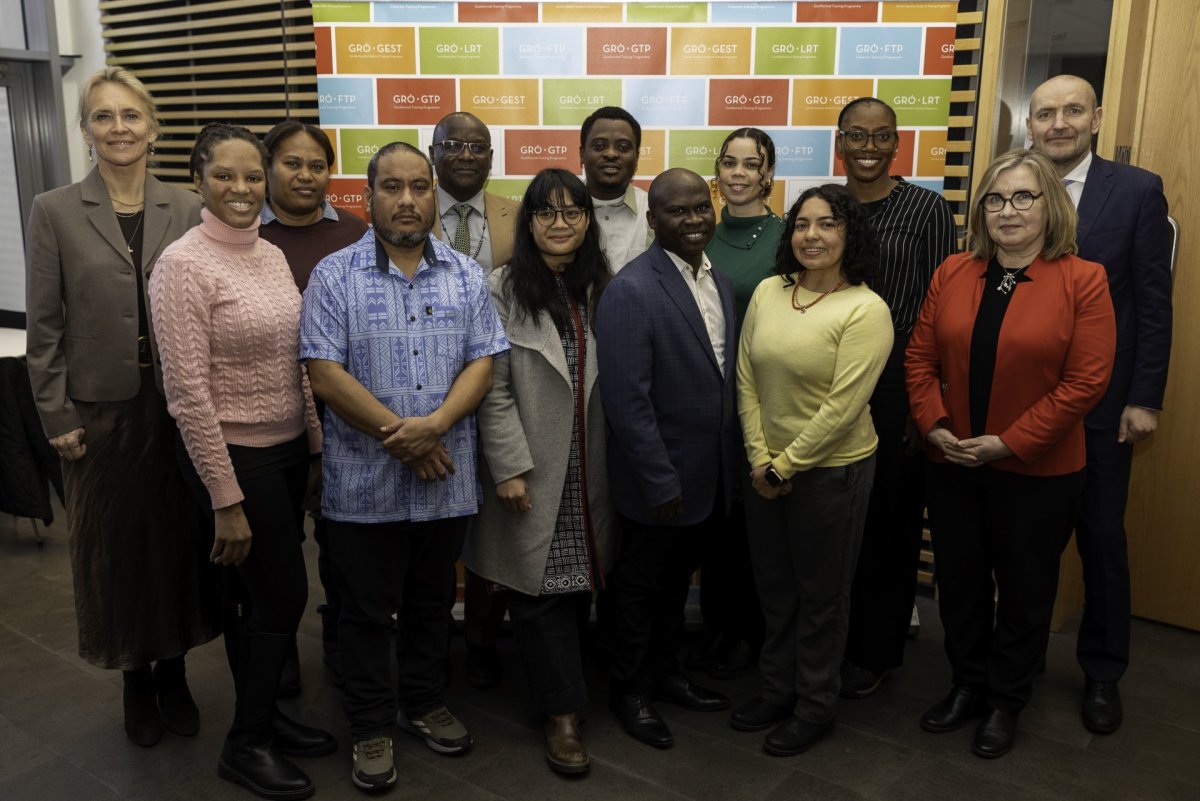
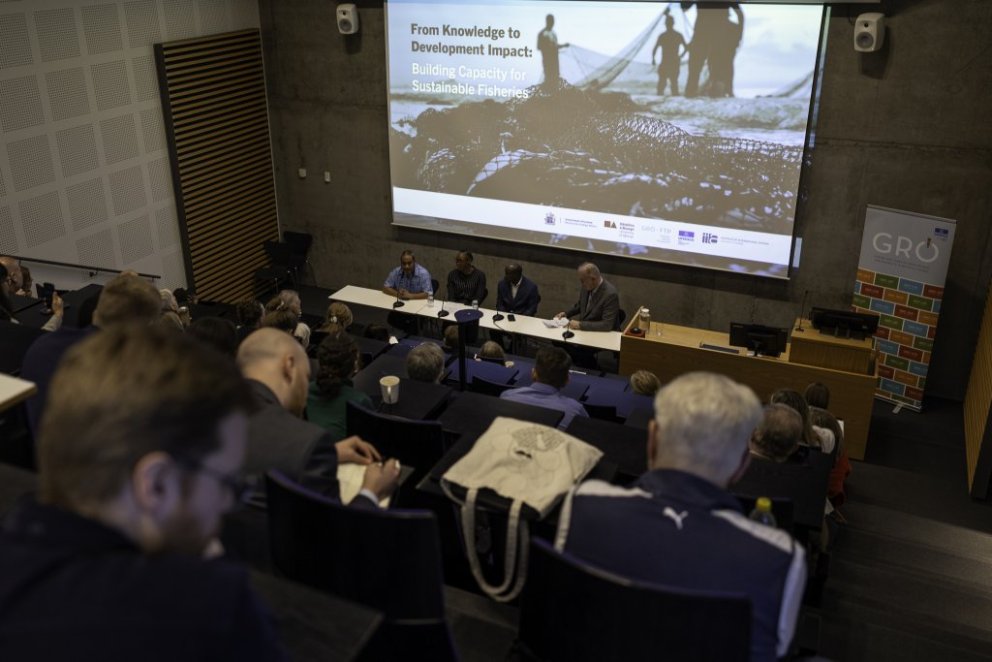
The second event in the series From Knowledge to Development Impact focusing on the work of the GRÓ Fisheries Training Programme and its impact after almost three decades of activity, took place in Akureyri on the 4th of February. At the event numerous alumni from the programmes shared their stories of how they are working on advancing sustainable fisheries in their home countries in all aspects of the fisheries value chain. The recording is available online.
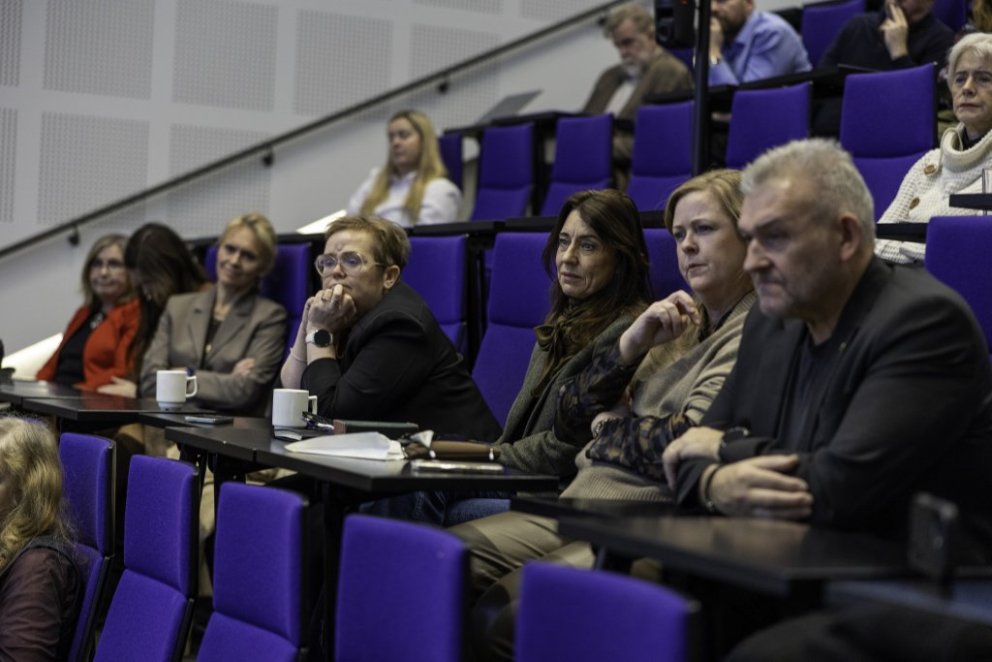
Dr. Áslaug Ásgeirsdóttir, Rector of the University of Akureyri, welcomed the more than 60 participants that were present at the meeting, as well as the almost 200 participants that took part online from all over the world. The Rector mentioned that the University is proud of having been associated with the GRÓ FTP part of the training from the outset and that the fellows that have enriched the academic community in Akureyri with their knowledge and experience.
Ms. Þorgerður Katrín Gunnarsdóttir, the Minister for Foreign Affairs, emphasised that development cooperation is a key driver of prosperity, security, and sustainability, noting that Iceland itself was a recipient of such assistance only half a century ago but now ranks among the world’s most prosperous nations. The Minister said she was proud that Iceland is staying on course and not cutting but increasing support to development cooperation at a time of uncertainties when many important partners are shifting priorities and cutting budgets. She added that in times of mis- and disinformation, it is especially important to showcase the positive results of development cooperation. “We are here to share stories of how investment in people, knowledge, skills, and leadership, translates into lasting impact when fellows return home equipped to strengthen institutions, improve governance, and make a difference in their communities,” she said.
The minister stressed that ocean affairs are central to Iceland’s domestic and foreign policy, reflecting the country’s deep reliance on the sustainable use of marine resources. She also highlighted the vital role of aquatic foods in strengthening global food security, while warning of the serious challenges facing the world’s oceans. “We operate the GRÓ Fisheries Training Programme, as a strategic investment in sustainable fisheries, economic progress and the protection of the world’s oceans,” the Minister said.
Testimonies of success from around the world
In total 1,858 fellows from more than 100 countries have completed the training at the four GRÓ Training Programmes, that in addition to sustainable fisheries focus on geothermal energy, gender equality and land restoration. Out of these more than 500 are graduates of the GRÓ Fisheries Training Programme. Many of the graduates have taken on leadership roles in their home countries and are at the forefront of advancing sustainable fisheries.
In a video about the impact of the GRÓ Fisheries Training Programme the historical perspective was provided and fellows shared their personal stories through short video recordings and written testimonials of how the Programme benefitted them and their home institutions and countries. The video testimonials came from fellows in Jamaica, some west African countries and from Lake Victoria, highlighting how not only they improved their skills, but also how their views on fisheries as a whole has changed during their time at the programme. Fellows stated also that after returning home they have been able to share their experience and impact with numerous colleagues and have significant impact at policy level.
Training Programmes are catalysts, not endpoints
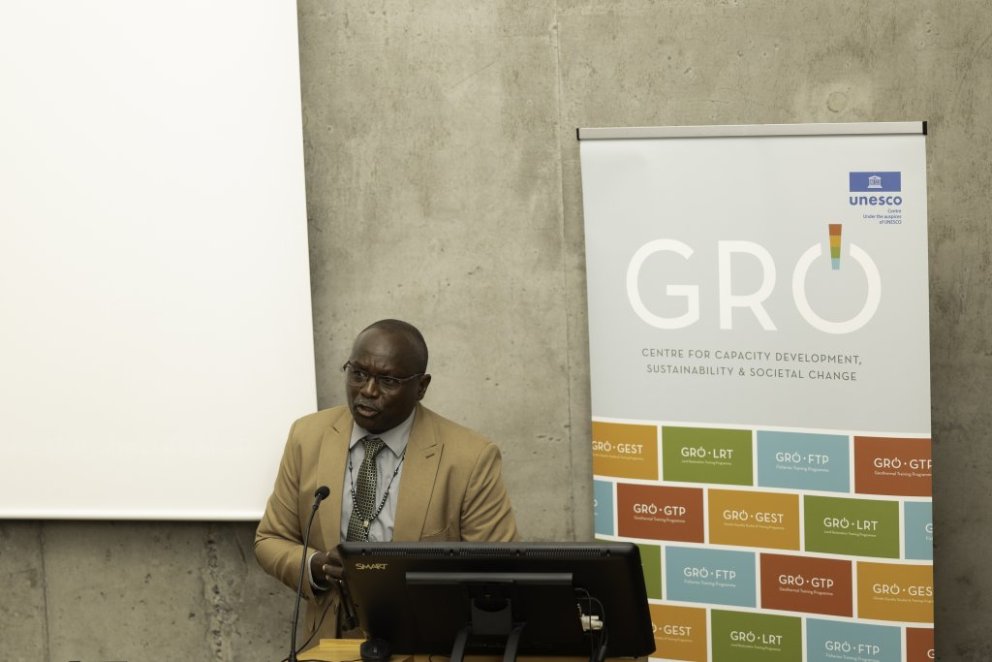
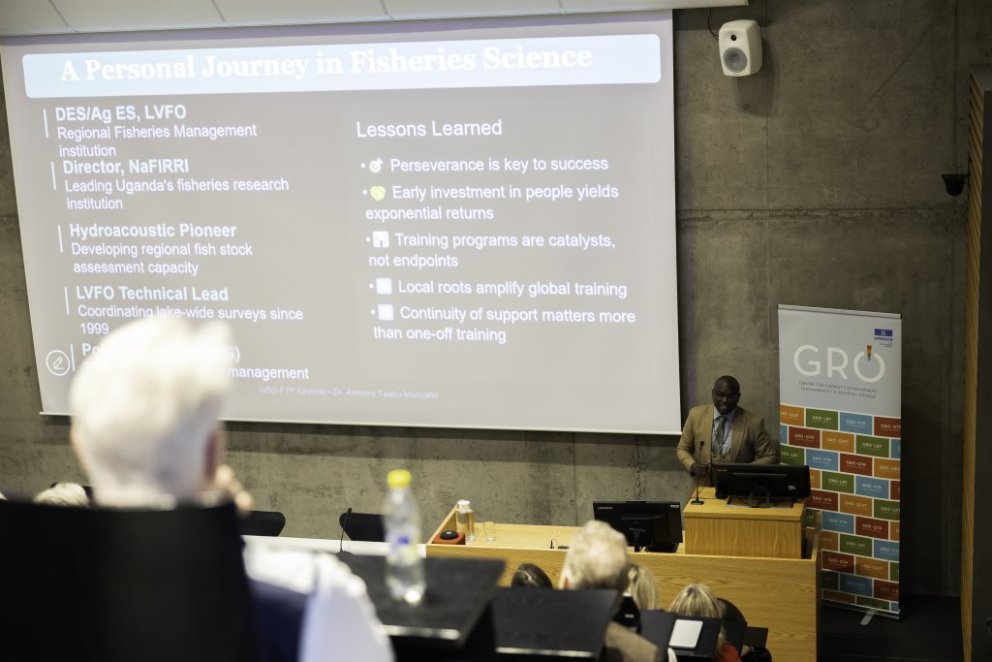
The keynote speaker was Dr. Anthony Taabu-Munyaho from Uganda, a fellow from 2004 and FTP scholarship recipient, shared his personal story of growth and success, which he dedicated to GRÓ. He also gave a comprehensive overview of management challenges in fisheries on Lake Victoria, which is shared by Uganda, Kenya and Tanzania, and how research projects of GRÓ FTP fellows from these countries have contributed to addressing those challenges. He stated that Iceland made him as what he has become, from a young scientist volunteering for the National Fisheries Resource Research Institute of Uganda and, after having taken part in the 7th cohort of the Fisheries Training Programme, becoming an employee at the Institute. After being awarded a GRÓ scholarship and completing his PhD degree from University of Iceland in 2014 he shortly took on the leadership of NaFIRRI, which heads all fisheries research in Uganda, and later became the acting secretary general of Lake Victoria Fisheries Organization, that oversees the management of Africa’s greatest inland fishery. During his time as senior scientist and leader of fisheries in Uganda, he was supported by GRÓ FTP to attend numerous conferences to share his research outcomes. Dr. Taabu concluded that such capacity building should never be a one-off opportunity, but rather a continuous journey of opportunities and resilience. “Training programmes are catalysts, not endpoints,” he remarked.
GRÓ FTP’s role in supporting sustainable fishing in Lake Victoria
Dr. Taabu gave an overview of Lake Victoria, the World’s largest inland fishery with an annual yield of 1 million tonnes, which is not far from Iceland’s annual catch. About 220.000 fishermen fish from the lake. Including the whole value chain the lake provides employment to more than 4 million people.
About 100 fellows have come to the GRÓ FTP from the three countries that share the lake: Tanzania, Uganda and Kenya. Dr. Taabu described dramatic changes in fish landings from the lake and how various challenges such as overfishing, use of illegal fishing gear, harvest of immature fish, increased fishing effort and pollution from catchment, are affecting the lake, in addition to environmental challenges such as the impacts of climate change, eutrophication, habitat degradation, invasive special effects and lake level fluctuations.
Dr. Taabu mentioned how the three countries have tackled these challenges and management of the lake in different ways and how cooperation, co-ordination and co-management with the support of fisheries science is gaining ground, combining national enforcement with local participation.
Dr. Taabu highlighted that out of the 268 GRÓ FTP fellows that have been trained from Africa, 98 are from Lake Victoria Riparian countries and how research done at GRÓ FTP has helped fisheries professionals from around the lake better understand the health of the fish stocks and how it has supported their efforts to manage the resource in a sustainable manner “With over 500 fellows trained worldwide, more than half from Africa and nearly 10% progressing to Master’s and PhD levels, the programme’s impact on global and African fisheries capacity building is undeniable,” Dr. Taabu concluded.
Lessons from GRÓ FTP in the Caribbean and the Pacific
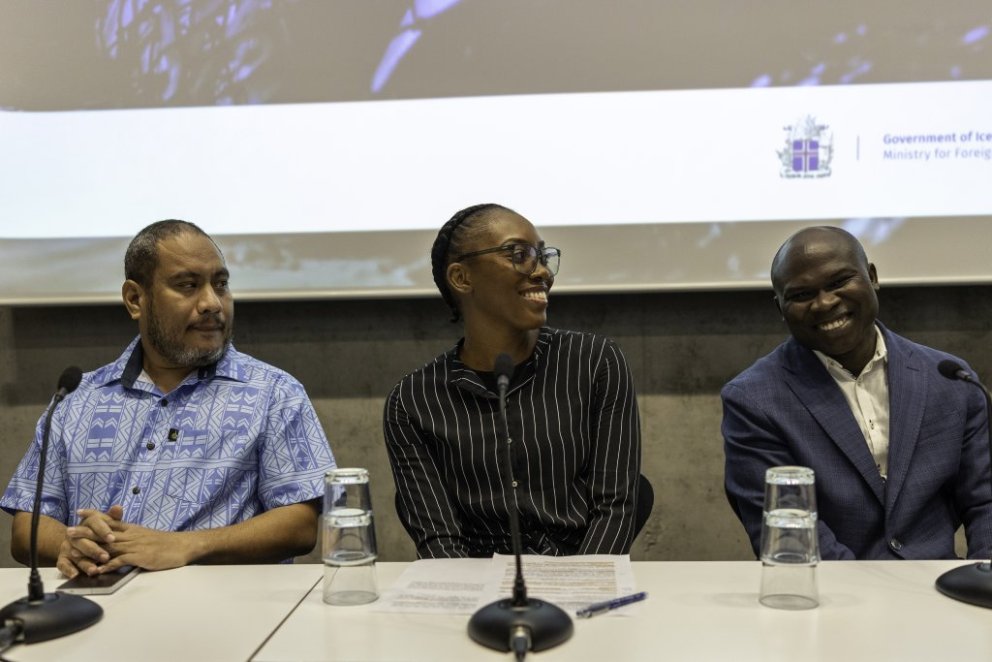
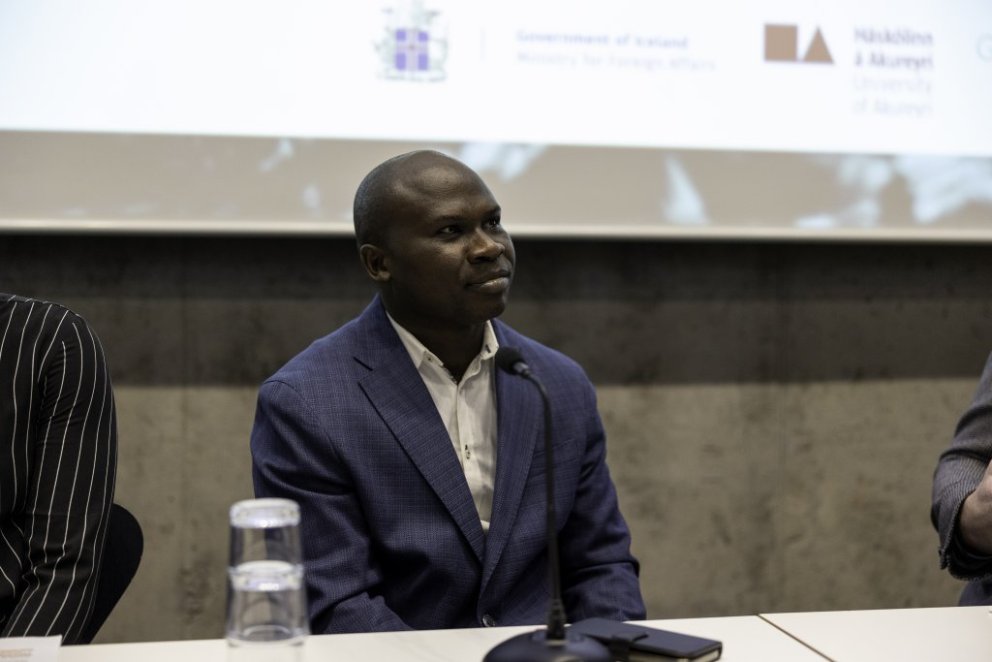
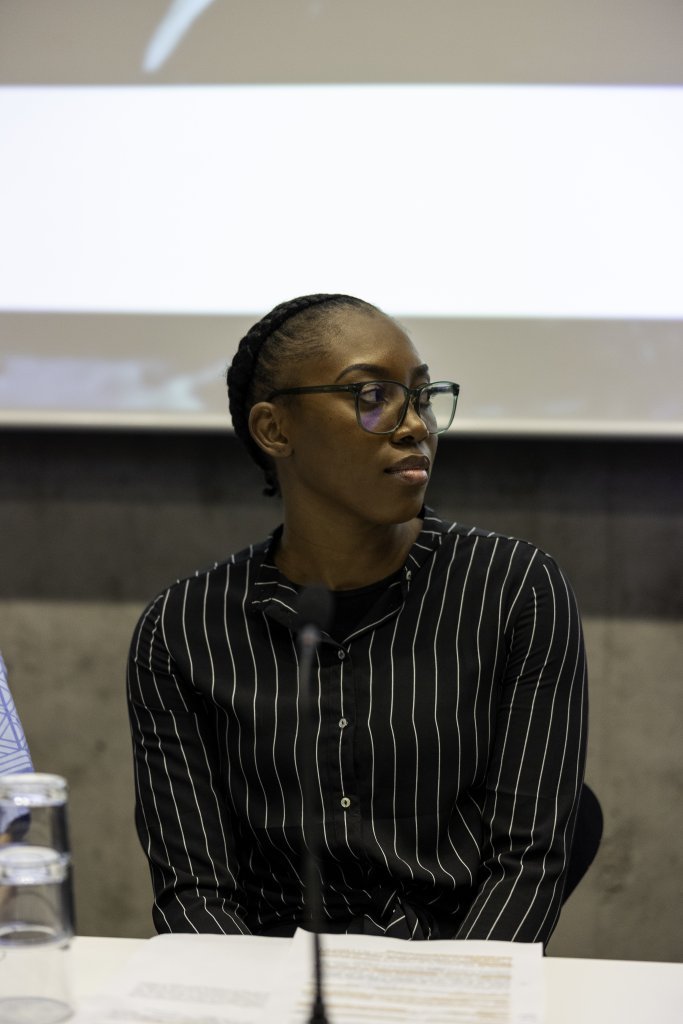
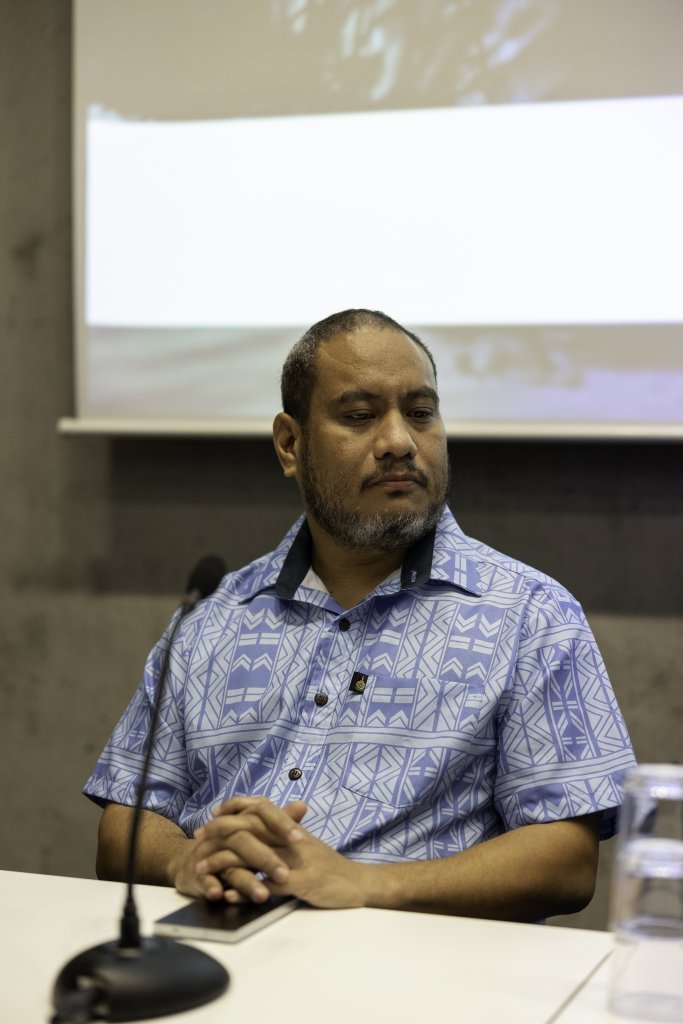
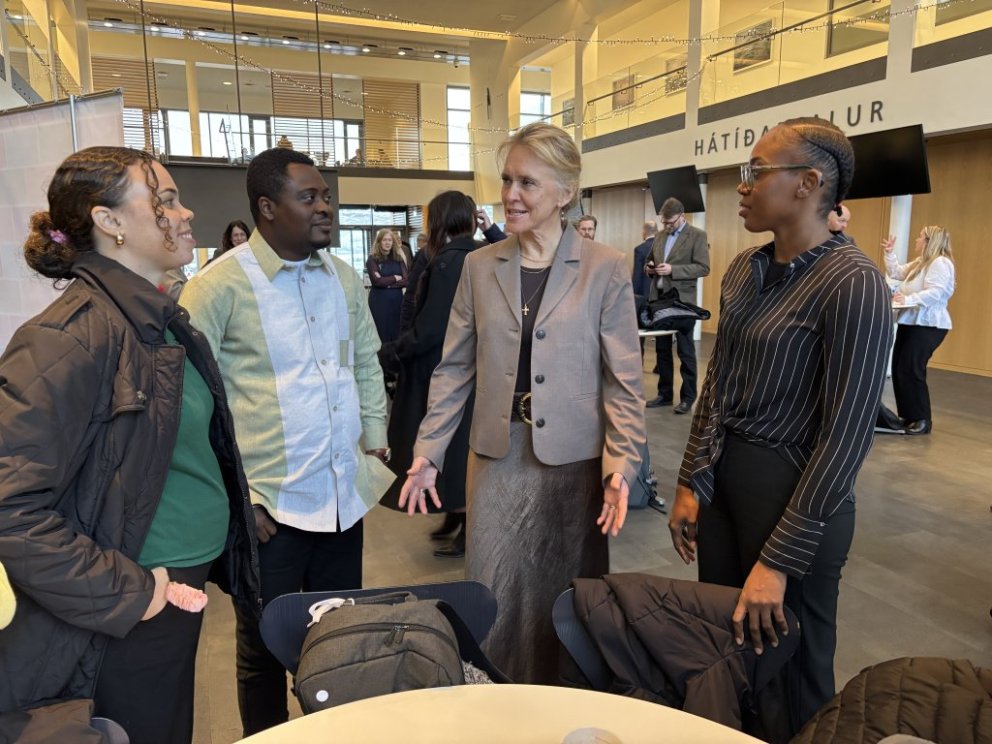
Mr. Þór Ásgeirsson, Director of the GRÓ Fisheries Training Programme, moderated a panel discussion with three GRÓ FTP fellows where Ms. Annakay Crawford from Jamaica, Mr. Solomon Haeremai from Papua New Guinea, and Dr. Olanrewaju Femi Olagunja from Nigeria shared insights into what Iceland has to offer countries developing their fisheries, and what they gained from their experience outside the classrooms.
Ms. Crawford spoke about fisheries management in the Caribbean region, where about 30 countries share several high value fish stocks and invertebrates. The countries work together through the Carribean Regional Fisheries Mechanism that is responsible for promoting and facilitating responsible use of fisheries and aquaculture in the region. Ms. Crawford said the main lessons that could be transferred to the Caribbean region from her experience in Iceland is not a specific management tool, but rather the commitment in the way fisheries management is anchored in law, institutional arrangements and data.
“Fisheries management must be backed by a system that makes reporting mandatory. In Iceland you can not process and not report. You cannot land and not report. You can not transfer quota and not report. These are not just best practice ideas; they are management frameworks that are embedded in law. I believe that approach can be transferred in the Caribbean,” she said. Ms Crawford explained that in the Caribbean the policy intent to manage fisheries in a sustainable way is solid, but that strong harmonised data systems are missing and more integrated legal and institutional arrangements.
Dr. Lanre felt that his academic experience through the GRÓ scholarship programme may have enriched the Icelandic academic environment that he was part of at the University of Iceland for mutual benefits. “Bringing in the challenges we are facing as a developing economy into Icelandic academia is providing an insight into different social and scientific challenges that are being felt by developing economies,” Dr. Lanre said highlighting how the view of Icelandic academia is thus being broadened through its participation in GRÓ projects.
Mr. Solomon Haeremai from Papua New Guinea spoke about elements of the Icelandic fishing management system that could be applied to improve sustainability of small-scale fisheries in his home country. He sees opportunities to improve the current management system and to add value to the products. “The management system that inspired me through this learning and the GRÓ programme, is the quota system and the auction market that is driving the value and quality of the product to meet the market demand and criteria so the fishermen and the consumers are satisfied.” He explained how better regulating fisheries and strengthening management measures can add value to the product and improve traceability to meet market needs and satisfaction of consumers.
External evaluation highlights impact of GRÓ alumni
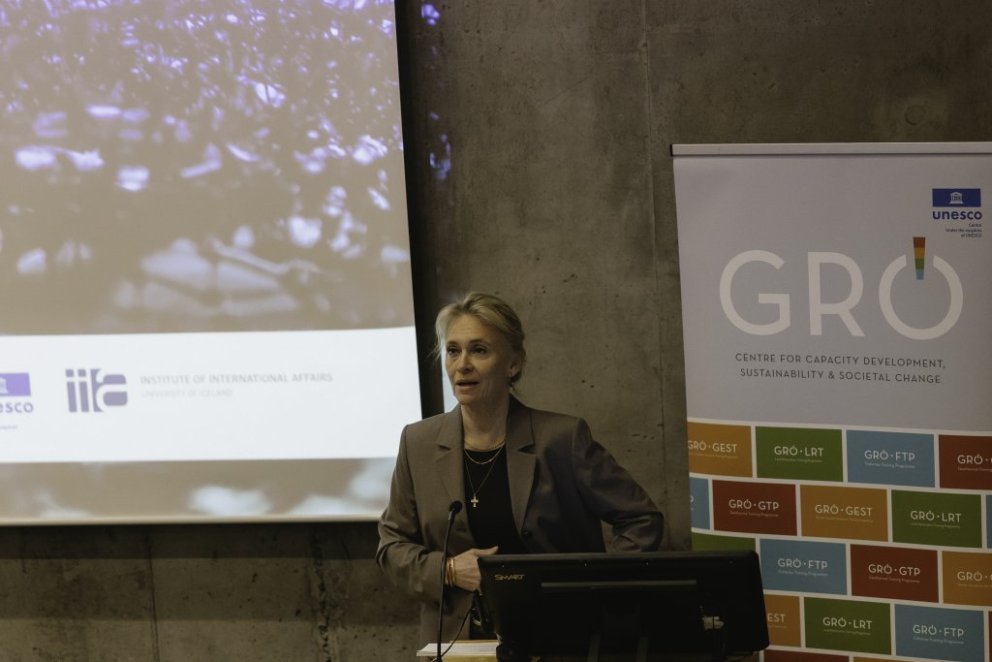
Ms. Nína Björk Jónsdóttir, Director General of the GRÓ Centre for Capacity Development, Sustainability and Societal Change, closed the event and thanked everyone that shared their stories of impact. She mentioned that further information on the impact of the GRÓ Training Programmes can be found in a recent external evaluation conducted by the German consultancy firm GOPA. She also paid tribute to all the staff of the GRÓ Fisheries Training Programme over its almost three decades long history, including the two directors of the programme. Finally, she encouraged participants to come to the last two events in the series. The next event, on the 3rd of March, will focus on the impact of the GRÓ Gender Equality Studies and Training Programme and the last event, on the 7th of May, on the GRÓ Land Restoration Training Programme. Both events will take place at the University of Iceland.
Photo credit: Jóndís Hinriksdóttir