


This gateway is designed to meet the needs of GRÓ-FTP's 2026-27 fellows and lecturers. Here they can access practical information about the programme, such as orientation guidelines and time schedules. Lecture materials and assignments, however, are shared through the access-limited File Storage.
Practical information
Welcome to Iceland
You arrive at the time of the year when winter is coming ... and the Christmas season is approaching.
This year, September 22nd is the day of the equinox, i.e., when daytime and night-time are of equal duration all over the planet.
After that we have progressively longer night-time than daytime here in the north and we also start to experience colder weather and occasional snow storms.
In September, typical daytime high temperatures in Reykjavik reach about 12°C, while overnight lows drop to 6°C with occasional drop to below zero. Overall, the monthly average temperature hovers around 8°C to 9°C, marking the crisp transition from summer to autumn.
On the official tourism website Visit Iceland you find a lot of practical information on the weather, what to wear, food, currency, safety issues etc.
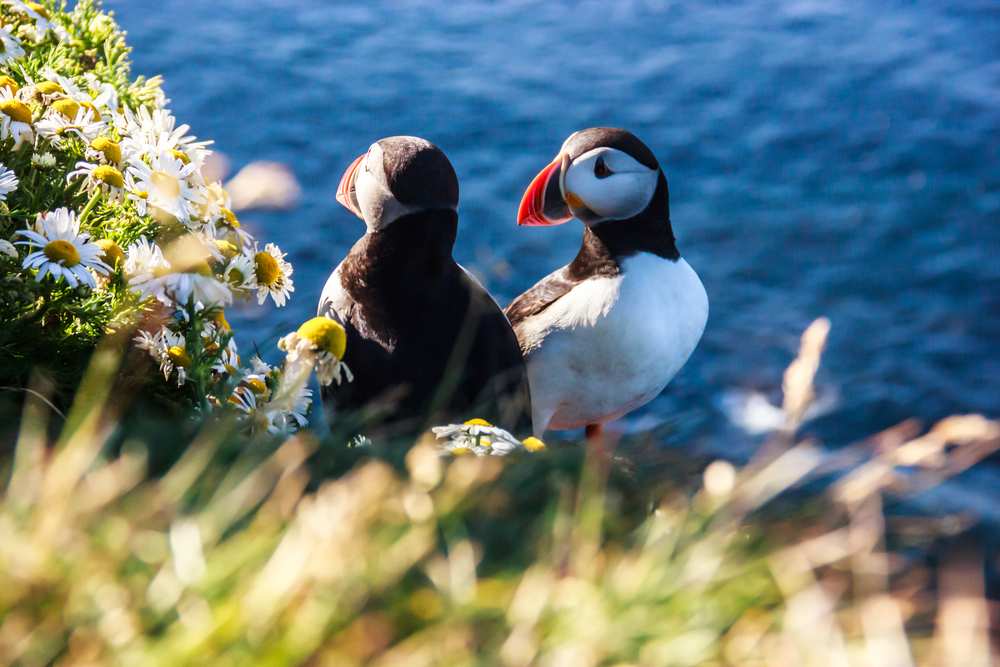
MFRI, Hafnarförður- photo by MFRI
Incoming fellows profile
The 2026-27 cohort includes 18 fellows from 10 countries -- in the Caribbean, Africa and Asia. Although we strive to have equal number of men and women in the programme, this year men are 11 and women only 7. The distribution on lines of specialisation is equal this year, 6 fellows on each (the Fisheries Policy and Management line, the Aquatic Resource Assessment and Monitoring line and the Sustainable Aquaculture line).
For individual fellows' profile see here >
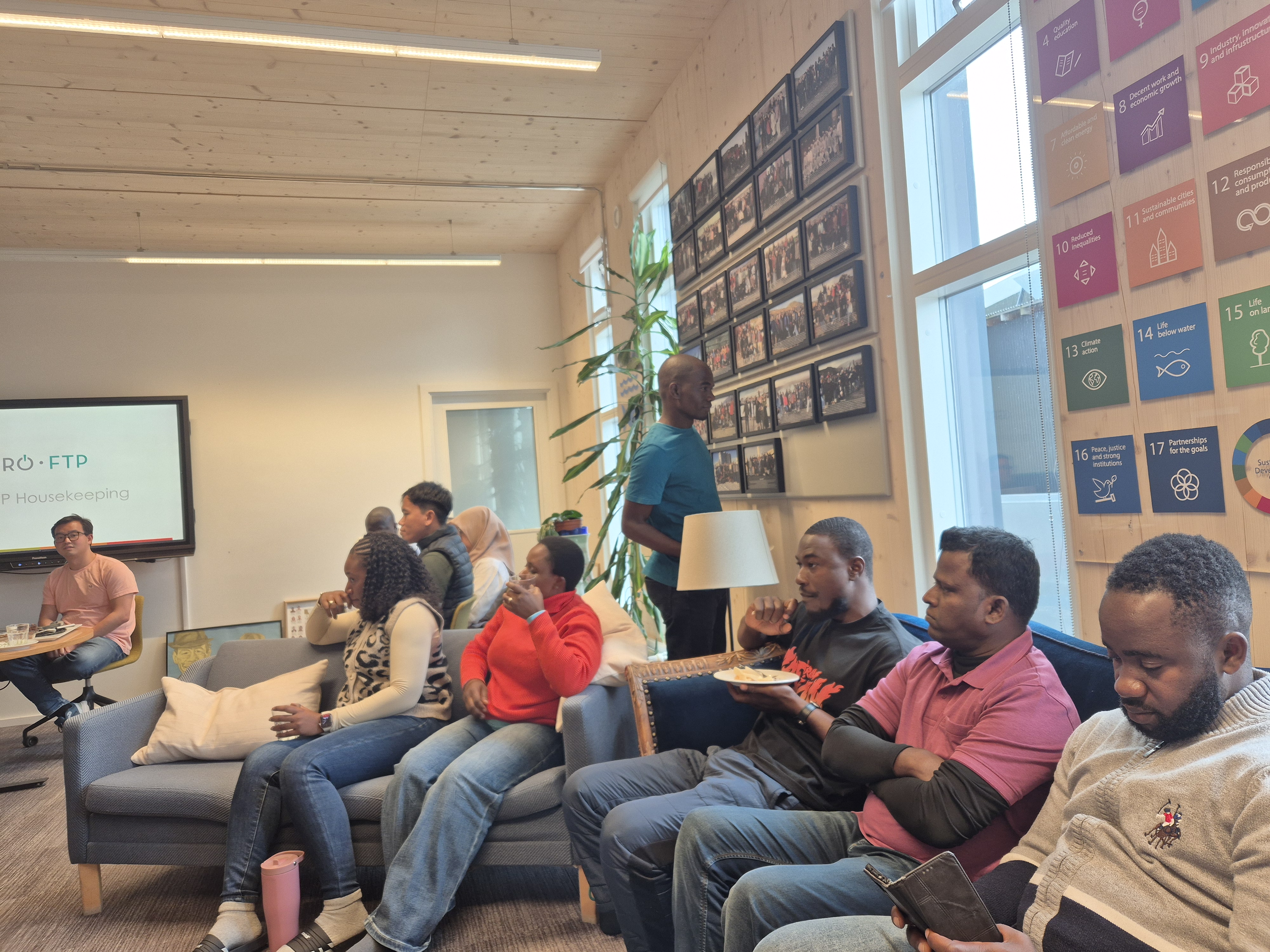
This year´s FTP staff
The GRÓ-FTP team ...
from left, Stefán Úlfarsson, Zaw Myo Win, Julie Ingham and Þór Ásgeirsson.
More information here >
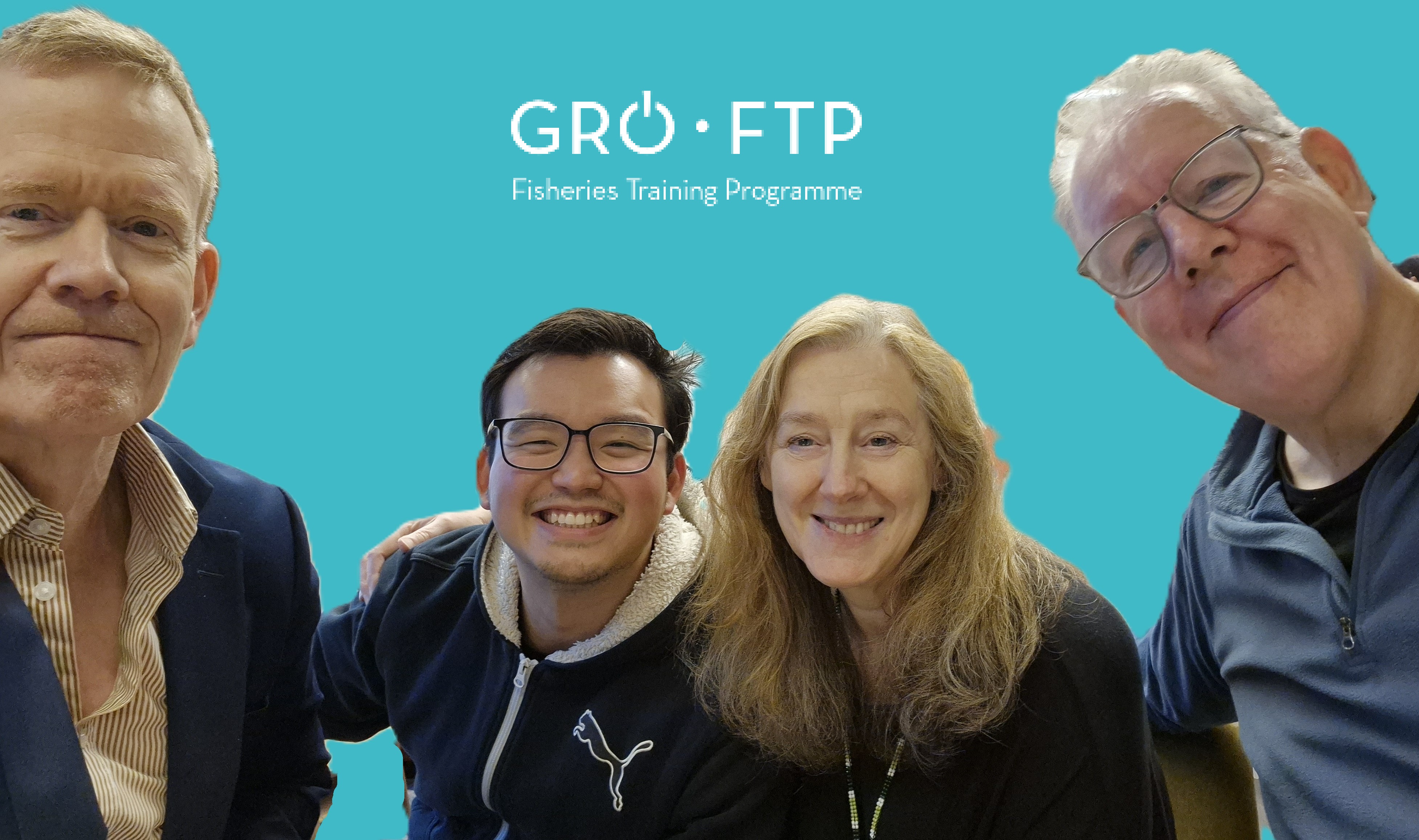
Practical information

It is always challenging to settle into a new society. To help incoming fellows settling in, FTP has put together a handbook with practical information on weather conditions, suitable clothing, accommodation, service hours, entertainment, transportation, important phone numbers and so on.
It is possible to upload a PDF version of the GRÓ FTP Handbook here>
Six-month Training - Curriculum
Below is a brief extract from GRÓ FTP's most recently updated curriculum.
For the full version, please download here>
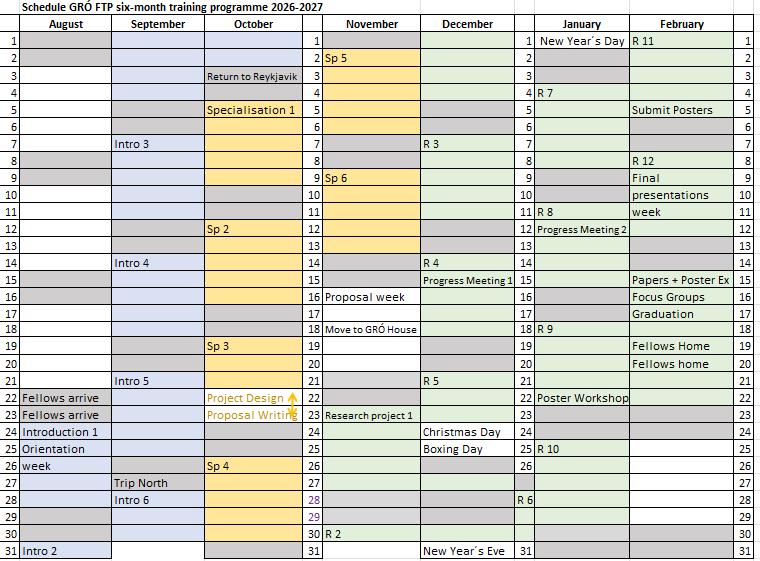
The core activity of GRÓ FTP is an annual post-graduate level training programme in Iceland, which aims to strengthen the professional capacity and competency of fellows to actively contribute to work done in their respective organisations. Each year the course runs for six months and comprises three modules: Introduction, specialisation and individual research project. Successful graduates receive a UNESCO GRÓ certificate of completion.
Introduction
The introductory part occupies the first 7 weeks of the programme and gives fellows a holistic view of fisheries, providing them with insights into various disciplines within fisheries and their connectedness.
The fellows receive a comprehensive overview of fisheries in an international context, sharpening their understanding of the challenges and opportunities in fisheries in their home countries.
The introduction consists of a series of seminars, tutorials, site visits and assignments, touching upon the subject of personal and professional growth and group dynamics.
GRÓ FTP puts emphasis on environmental conservation and gender equality, both integral to sustainable fisheries and the development of the fisheries sector.
Specialisation
On completion of the introduction, fellows join one of four lines of specialisation for the next 7 weeks of the programme: Fisheries Policy and Management; Aquatic Resource Assessment and Monitoring; Quality Management of Fish Handling and Processing; or Sustainable Aquaculture.
Fellows now have the task of attending a full specialisation programme while, at the same time, developing research project ideas into a proposal.
During this phase, heads of lines provide fellows with course outlines, time schedules and reading materials specific to their lines of specialisation. They also lead the process of assigning supervisor(s) to work with fellows on their research project.
FTP staff, on the other hand, monitor fellows’ progress and also provide support and tools across the specialisation lines.
Research project
The programme culminates in a 12-week research project in which fellows work closely with a supervisor on a pressing issue related to their work at home.
The project work combines the fellow’s experience and practical skills gained in the introductory and specialist training, along with their personal goals on an individual research topic. Final projects most often involve data directly from fellows' home countries.
On completion, a research paper is submitted and published on the GRÓ-FTP website.
In addition, fellows are required to design an information poster summarising their research and present their results in an open dissemination meeting.
Six-month Training - Course catalogue
The course catalogues offer an overview of the programme's typical content and is not intended to be exhaustive.
Lecture topics and content may be adjusted between programme cycles to ensure that the curriculum remains relevant and responsive.
Such adjustments enable us to address the specific needs and interests of participating fellows while also reflecting the availability and expertise of guest lecturers and faculty members.
For the Introductory Course Catalogue , please download here>
Six-month Training - Schedule
Introduction
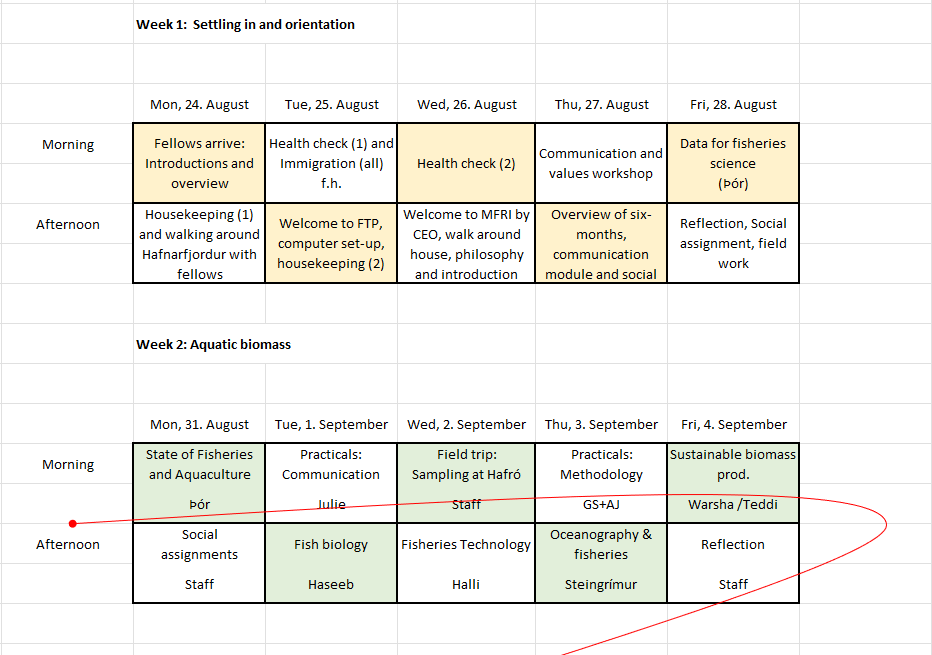
Week 1 (Aug 24-30): Orientation
Below is a preliminary schedule for the first week in Iceland. Please be aware that it may be necessary to adjust it with little notice.
| Week 1: Settling in and orientation | ||||||
| Monday 24th August | ||||||
| 10:00 | 10:45 | >Hostel Fjörður | Greet and walk to MFRI | FTP staff | O | |
| 11:00 | 11:45 | >MFRI, 1st floor | Introductions | FTP staff | O | |
| 11:45 | 12:00 | >MFRI, 2nd floor | Orientation in MFRI | Julie, Zaw | O | |
| 13:00 | 13:45 | >MFRI, 1st floor | Housekeeping Issues | Zaw, Julie | O | |
| 14:00 | 15:30 | >Around Hafnarfjörður | Orientation in the local area | Þór, Zaw, Julie | O | |
| *S = Seminars (to know); T = Tutorials (to do); M = Master (to be); O = Other /// Sc = Scheduled; Ct= Contacted; Co = Confirmed | ||||||
| Tuesday 25 August | ||||||
| 08:15 | 10:30 | >Health centre (Reykjavík downtown) | Health check (Group 1) | FTP staff | O | |
| 10:30 | 12:00 | >Immigration | Compulsory registration at Immigration | FTP staff | O | |
| Return to MFRI for lunch | ||||||
| 13:00 | 13.40 | >MFRI, 1st floor | Welcome to GRÓ FTP | Þór | O | |
| 13:50 | 14.30 | >MFRI, 1st floor | IT and laptops | WISE | O | |
| 14:40 | 15:30 | >MFRI, 1st floor | The Training Programme: Philosophy, Introduction, Assignments |
Stefán | O | |
| 15:40 | 16:20 | >MFRI, 1st floor | Housekeeping Issues, cont. | Zaw | O | |
| *S = Seminars (to know); T = Tutorials (to do); M = Master (to be); O = Other /// Sc = Scheduled; Ct= Contacted; Co = Confirmed | ||||||
| Wednesday 26th August | ||||||
| 09:15 | 10:30 | >Health centre (Reykjavík downtown) | Health check (Group 2) | GRÓ FTP staff | O | |
| Afternoon session starts at 12:30 | ||||||
| 13:00 | 13:40 | >MFRI, 1st floor | Welcome to MFRI | MFRI CEO | O | |
| 13:40 | 14:30 | >MFRI, 1st floor | Guided tour of MFRI | Þór, Zaw | O | |
| 14:30 | 15:30 | >Fellows lounge 2nd floor | Afternoon coffee and Q+A | Staff | O | |
| *S = Seminars (to know); T = Tutorials (to do); M = Master (to be); O = Other /// Sc = Scheduled; Ct= Contacted; Co = Confirmed | ||||||
| Thursday 27th August | ||||||
| 09:00 | >MFRI, 1st floor | Communication Workshop | Julie and Þór | O | ||
| >MFRI, 1st floor | Communication Workshop | Julie and Þór | O | |||
| 11:45 | >MFRI, 1st floor | Communication Workshop | Julie and Þór | O | ||
| Lunch | ||||||
| 13:00 | 13:40 | >MFRI, 1st floor | The GRÓ Fisheries Training Programme | Julie | O | |
| 13:50 | >MFRI, 1st floor | Professional Communication | Julie | O | ||
| 15:30 | >Out and about | Social Assignment | Julie/Fellows | O | ||
| *S = Seminars (to know); T = Tutorials (to do); M = Master (to be); O = Other /// Sc = Scheduled; Ct= Contacted; Co = Confirmed | ||||||
| Friday 28th August | ||||||
| 09:00 | 09:45 | >MFRI, 1st floor | Data for Fisheries Science | Þór Ásgeirsson | S | |
| 10:00 | 10:45 | >MFRI, 1st floor | Data for Fisheries Science | Þór Ásgeirsson | S | |
| 11:00 | 11:45 | >MFRI, 1st floor | Data for Fisheries Science | Þór Ásgeirsson | S | |
| Lunch | ||||||
| 13:00 | 13:30 | >MFRI, 1st floor | Reflection | Staff and Fellows | O | |
| 13:30 | >Out and about | Social Assignment preparation | Fellows | O | ||
| 15:45 | >Out and about | Social Assignment preparation | Fellows | O | ||
| *S = Seminars (to know); T = Tutorials (to do); M = Master (to be); O = Other /// Sc = Scheduled; Ct= Contacted; Co = Confirmed | ||||||
Week 2 (Aug 31-Sep 6): Aquatic biomass
Below is a preliminary schedule for the second week in Iceland. Please be aware that it may be necessary to adjust it with little notice.
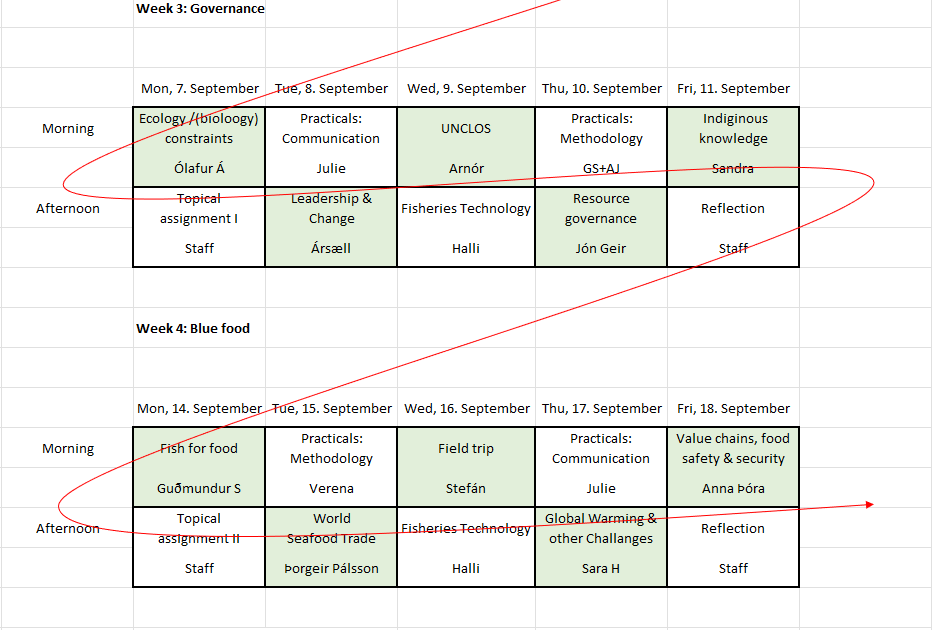
Week 3 (Sep 7-13): Governance
Week 4 (Sep 14-20): Blue food
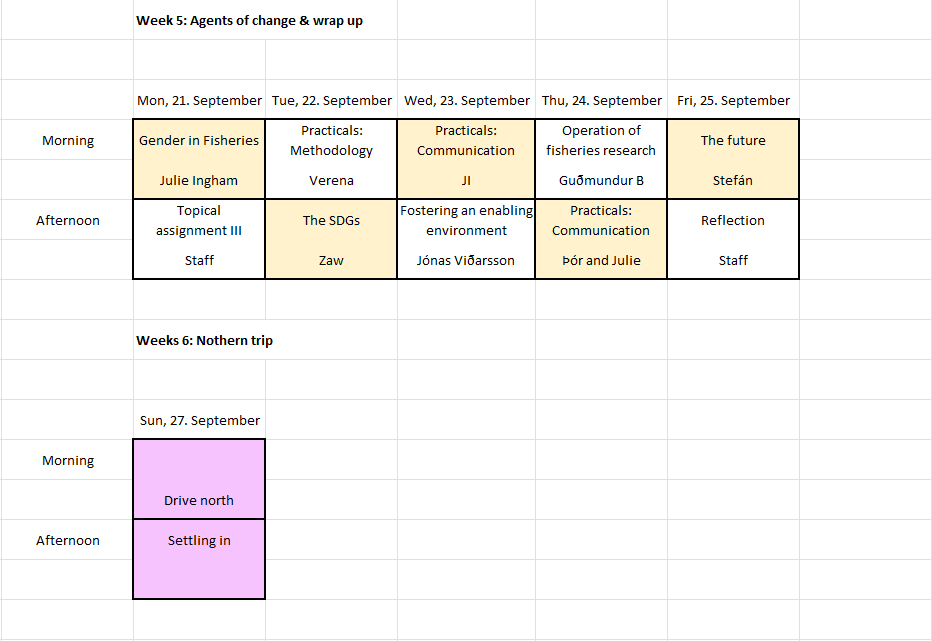
Week 5 (Sep 21-27): Agents of change
| Week 5: Agents of change & wrap up | ||||||
| Mon, 21 Sept | ||||||
| 09:00 | 09:45 | >MFRI, 1st floor | Gender in Fisheries | Julie | S | Co |
| 10:00 | 10:45 | >MFRI, 1st floor | Gender in Fisheries | Julie | S | Co |
| 11:00 | 11:45 | >MFRI, 1st floor | Gender in Fisheries | Julie | S | Co |
| Lunch | ||||||
| 13:00 | 13:45 | >MFRI, 1st floor | Presentations of Topical Assignment III | Fellows | M | Co |
| 14:00 | 14:45 | >MFRI, 1st floor | Presentations of Topical Assignment III | Fellows | M | Co |
| 15:00 | 15:45 | >MFRI, 1st floor | Presentations of Topical Assignment III | Fellows | M | Co |
| 16:00 | 16:45 | >MFRI, 1st floor | Orientation for the week | Fellows | M | Co |
| *S = Seminars (to know); T = Tutorials (to do); M = Master (to be); O = Other /// Sc = Scheduled; Ct= Contacted; Co = Confirmed | ||||||
| Tue, 22 Sept | ||||||
| 09:00 | 09:45 | >MFRI, 1st floor | Research Methods: Session 4/4 - Data Collection, Sampling and Qualitative Research | Verena Karlsdóttir (University of Akureyri) |
T | Co |
| 10:00 | 10:45 | >MFRI, 1st floor | Research Methods: Session 4/4 - Data Collection, Sampling and Qualitative Research | Verena Karlsdóttir (University of Akureyri) |
T | Co |
| 11:00 | 11:45 | >MFRI, 1st floor | Research Methods: Session 4/4 - Data Collection, Sampling and Qualitative Research | Verena Karlsdóttir (University of Akureyri) |
T | Co |
| Lunch | ||||||
| 13:00 | 13:30 | >MFRI, 1st floor | The GRÓ Center | María Erla (Director General of GRÓ Center) | S | Co |
| 13:30 | >On the go | Field trip: Hafró's Aquaculture Experimental Station, Staður /Grindavik | Staff | M | Sc | |
| >On the go | Field trip: Hafró's Aquaculture Experimental Station, Staður /Grindavik | Staff | M | Sc | ||
| 16:30 | >On the go | Field trip: Hafró's Aquaculture Experimental Station, Staður /Grindavik | Staff | M | Sc | |
| *S = Seminars (to know); T = Tutorials (to do); M = Master (to be); O = Other /// Sc = Scheduled; Ct= Contacted; Co = Confirmed | ||||||
| Wed, 23 Sept | ||||||
| 09:00 | 09:45 | >MFRI, 1st floor | Operation of Fisheries Research Institutes and Project Management | Guðmundur Bergþórsson (CFO of MFRI) | S | Co |
| 10:00 | 10:45 | >MFRI, 1st floor | Operation of Fisheries Research Institutes and Project Management | Guðmundur Bergþórsson (CFO of MFRI) | S | Co |
| 11:00 | 11:45 | >MFRI, 1st floor | Personal Goals | Thor | T | Co |
| Lunch | ||||||
| 13:00 | 13:45 | >MFRI, 1st floor | Enabling Environment for Research, Innovations and Practical Solutions | Jónas Viðarsson (Matis) | S | Co |
| 14:00 | 14:45 | >MFRI, 1st floor | Enabling Environment for Research, Innovations and Practical Solutions | Jónas Viðarsson (Matis) | S | Co |
| 15:00 | 18:00 | >On the go | Field Trip: IceFish Exhibition | Fellows | M | Co |
| *S = Seminars (to know); T = Tutorials (to do); M = Master (to be); O = Other /// Sc = Scheduled; Ct= Contacted; Co = Confirmed | ||||||
| Thu, 24 Sept | ||||||
| 09:00 | 09:45 | >MFRI, 1st floor | Professional Communication. Feedback on Assignment 3 | Julie Ingham | T | Co |
| 10:00 | 10:45 | >MFRI, 1st floor | Professional Communication. Cohesion | Julie Ingham | T | Co |
| 11:00 | 11:45 | >MFRI, 1st floor | Professional Communication. The skill of Synthesising in Literature Reviews | Julie Ingham | T | Co |
| Lunch | ||||||
| 13:00 | 13:45 | >MFRI, 1st floor | The SDGs | Zaw | S | Co |
| 14:00 | 14:45 | >MFRI, 1st floor | The SDGs | Zaw | S | Co |
| 15:00 | 15:45 | >MFRI, 1st floor | The SDGs | Zaw | S | Co |
| *S = Seminars (to know); T = Tutorials (to do); M = Master (to be); O = Other /// Sc = Scheduled; Ct= Contacted; Co = Confirmed | ||||||
| Fri, 25 Sept | ||||||
| 09:00 | 09:45 | >MFRI, 1st floor | The Future, Policy & Change | Stefán | S | Co |
| 10:00 | 10:45 | >MFRI, 1st floor | The Future, Policy & Change | Stefán | S | Co |
| 11:00 | 11:45 | >MFRI, 1st floor | The Future, Policy & Change | Stefán | S | Co |
| Lunch | ||||||
| 13:00 | 13:45 | >MFRI, 1st floor | TBD | Fellows | M | Co |
| 13:45 | 14:15 | >MFRI, 1st floor | Planning for the Northern Trip | Zaw | M | Co |
| 14:15 | 15:45 | >MFRI, 1st floor | TBD | Fellows | M | Co |
| *S = Seminars (to know); T = Tutorials (to do); M = Master (to be); O = Other /// Sc = Scheduled; Ct= Contacted; Co = Confirmed | ||||||
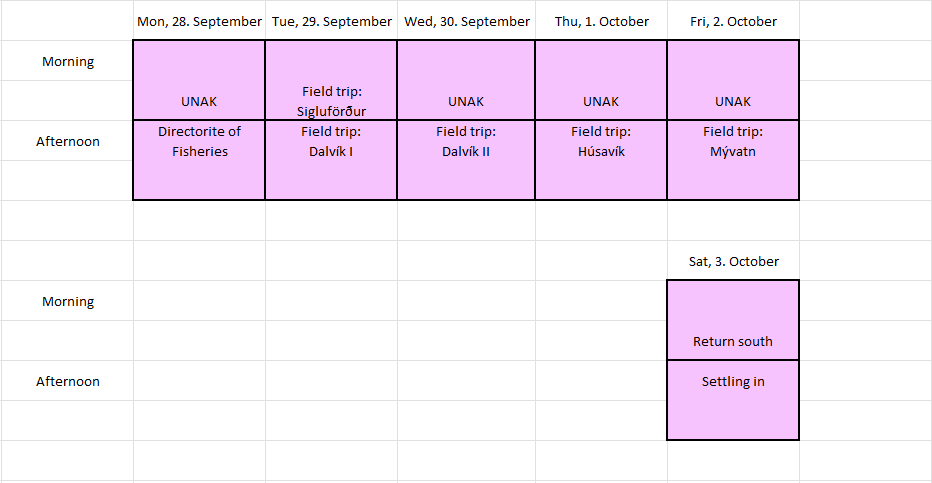
Week 6 (Sep 27 - Oct 4): Northern trip
| Week 6: Northern trip - preliminary schedule | ||||||
| Sun, 27 Sept | ||||||
| 10:00 | 16:00 | Bus | Travel to the north | FTP team | ||
| 16:00 | 19:00 | Guesthouse | Settling in (rooms etc) | FTP team | ||
| 19:00 | 20:00 | Guesthouse | Common dinner | FTP team | ||
| Mon, 28 Sept | ||||||
| 08:15 | 09:00 | UNAK - Borgir R262 | Welcoming and introd to UNAK+schedule | Hreiðar Thor Valtýsson | ||
| 09:15 | 12:00 | UNAK - Borgir R262 | Icelandic fisheries development | Hreiðar Thor Valtýsson | ||
| Lunch | ||||||
| 14:00 | 16:00 | UNAK - Borgir R262 | MSC-fisheries management | Óttar Erlingsson | ||
| Tue, 29 Sept | ||||||
| 08:00 | 09:30 | Bus | Drive to Siglufjörður | |||
| 09:30 | 10:30 | Siglufjörður | Rammi (shrimp factory) | FTP team | ||
| 10:30 | 11:30 | Siglufjörður | Herring museum | FTP team | ||
| Lunch | ||||||
| 13:00 | 14:00 | Dalvík | Samherji (dry fish plant) | FTP team | ||
| 14:15 | 15:30 | Dalvík | Samherji (fresh fish plant) | FTP team | ||
| 17:00 | 19:00 | Guesthouse | Personal goals | FTP team | ||
| 20:00 | 21:00 | Guesthouse | Personal goals | FTP team | ||
| Wed, 30 Sept | ||||||
| 08:15 | 10:00 | UNAK - Sólborg M203 | Fisheries, fisheries policies and rural development in fisheries communities | Grétar Eyþórsson | ||
| 10:15 | 12:00 | UNAK - Sólborg M203 | Fish auction markets | Freysteinn Nonni Mánason | ||
| Lunch | ||||||
| 13:00 | 13:40 | Bus | Leave University of Akureyri | FTP team | ||
| 13:40 | 14:30 | Dalvík | Auction market - Dalvík | FTP team | ||
| 14:45 | 16:00 | Dalvík | Sæplast (plastic molding for fisheries) | FTP team | ||
| Thu, 1 Oct | ||||||
| 08:15 | 10:00 | UNAK - Sólborg M202 | Icelandic Fisheries Management systems | Magnús Víðisson | ||
| 10:15 | 11:00 | UNAK - Sólborg M202 | Icelandic fisheries, economy and ITQ system | Stefán B. Gunnlaugsson | ||
| 11:00 | 12:00 | UNAK - Sólborg M202 | Welcome by rector | Rektor, Áslaug Ásgeirsdóttir | ||
| 12:30 | 13:30 | Bus | Drive to Húsavík | FTP team | ||
| 13:30 | 14:30 | Húsavík | GPG salting | FTP team | ||
| 14:45 | 16:00 | Húsavík | Whale museum | FTP team | ||
| Fri, 2 Oct | ||||||
| 08:15 | 10:00 | UNAK - Borgir R262 | Fisheries economic - evaluations of fisheries policies | Thanh Viet Nguyen | ||
| 10:15 | 12:00 | On the go | Slippurinn / GND (Akureyri's shipyard) | FTP team | ||
| 12:00 | Bus | Trip to Lake Mývatn | FTP team | |||
| Bus | Dimmuborgir (The Dark Castles) | FTP team | ||||
| Bus | Skútustaðir (traditional smoking) | FTP team | ||||
| 18:00 | Bus | Goðafoss (Waterfall of the Gods) | FTP team | |||
| Sat, 3 Oct | ||||||
| 09:00 | 10:00 | Wrap up | FTP team | |||
| 11:00 | 17:00 | Bus | ARAM and SAq fellows return to Reykjavik; FPM fellows settle in in Akureyri | FTP team | ||
Specialisation & research
To be published ...
Fellows news
News headlines

Welcome 28th cohort of fellows

Congratulations 2025-26 fellows
*